157 US Cities Pursue Local Climate Action Amidst Federal Rollbacks
A new database from the University of Maryland documents over 1,400 climate policies and programs implemented by 157 U.S. cities, demonstrating local progress despite federal inaction.
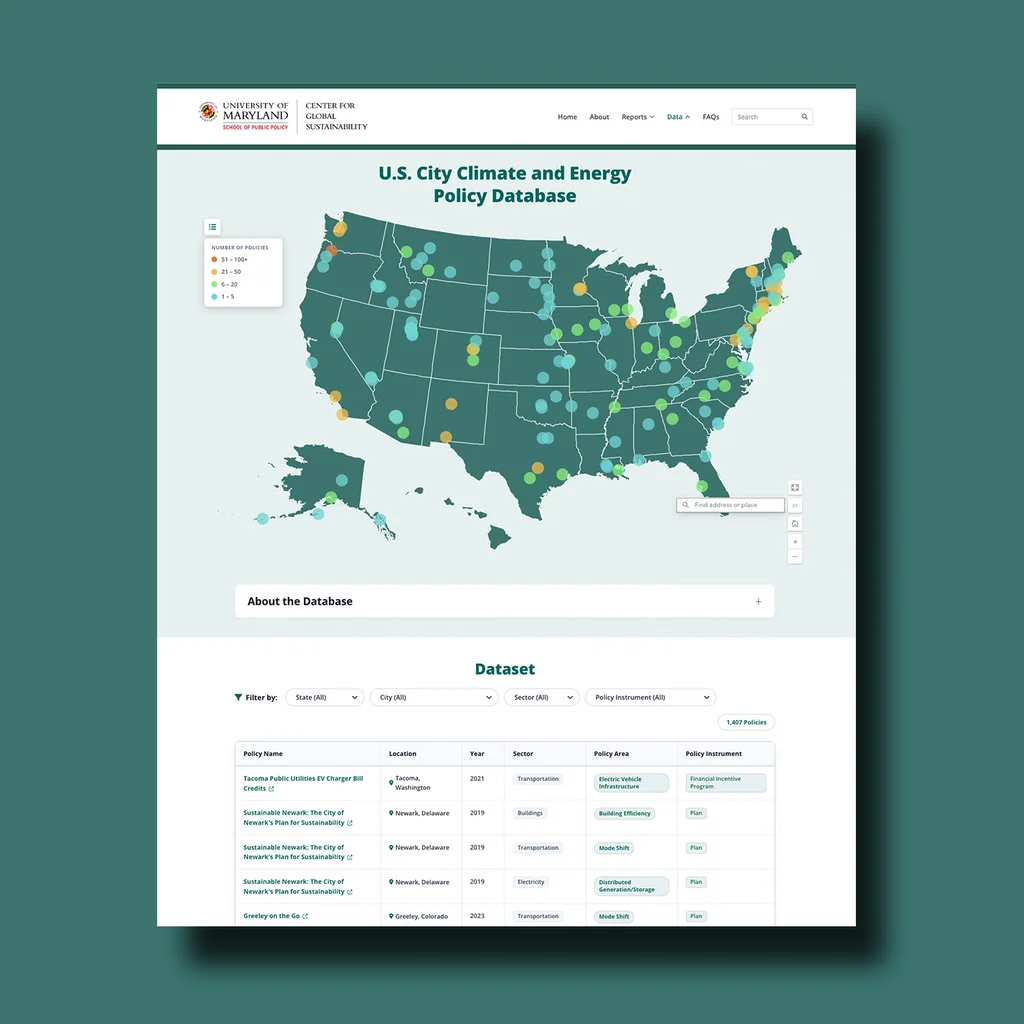
The University of Maryland's Center for Global Sustainability has launched a comprehensive database detailing climate policies and programs across 157 U.S. cities. This initiative, titled the U.S. City Climate & Energy Policy Database, catalogues over 1,400 actions ranging from building efficiency upgrades and financial incentives to heat mitigation strategies like increasing urban shade.
The database highlights local efforts to advance climate action, often in contrast to federal policy shifts. For instance, while federal rebates for switching to heat pumps were restricted, local programs in cities like Tacoma, Washington, continue to offer such incentives, supported by city and utility funding.
Featuring an interactive map and a dataset that links to city plans, the database categorizes actions by location, sector, and policy area. Nate Hultman, director of the Center for Global Sustainability, stated the database provides a clear picture of cities' responses to the current climate challenges and identifies opportunities to accelerate progress.
Notable examples include Cleveland's plan to upgrade city facilities with renewable energy and efficiency improvements, aiming for significant emissions reductions by 2030. Phoenix is actively combating extreme heat through its Shade Phoenix initiative, which involves planting trees and installing shade structures over the next five years.
While some policies in the database date back a decade, their local implementation provides a buffer against federal policy changes. The data underscores that local leadership in climate action is widespread and is establishing a foundation for future progress, even when federal initiatives falter.