18 States Exceed Pre-Pandemic Housing Inventory Levels
Eighteen U.S. states have surpassed pre-pandemic 2019 levels for active housing market inventory as of the end of August 2026. Nationally, total inventory remains below 2019 figures, but regional variations are significant.
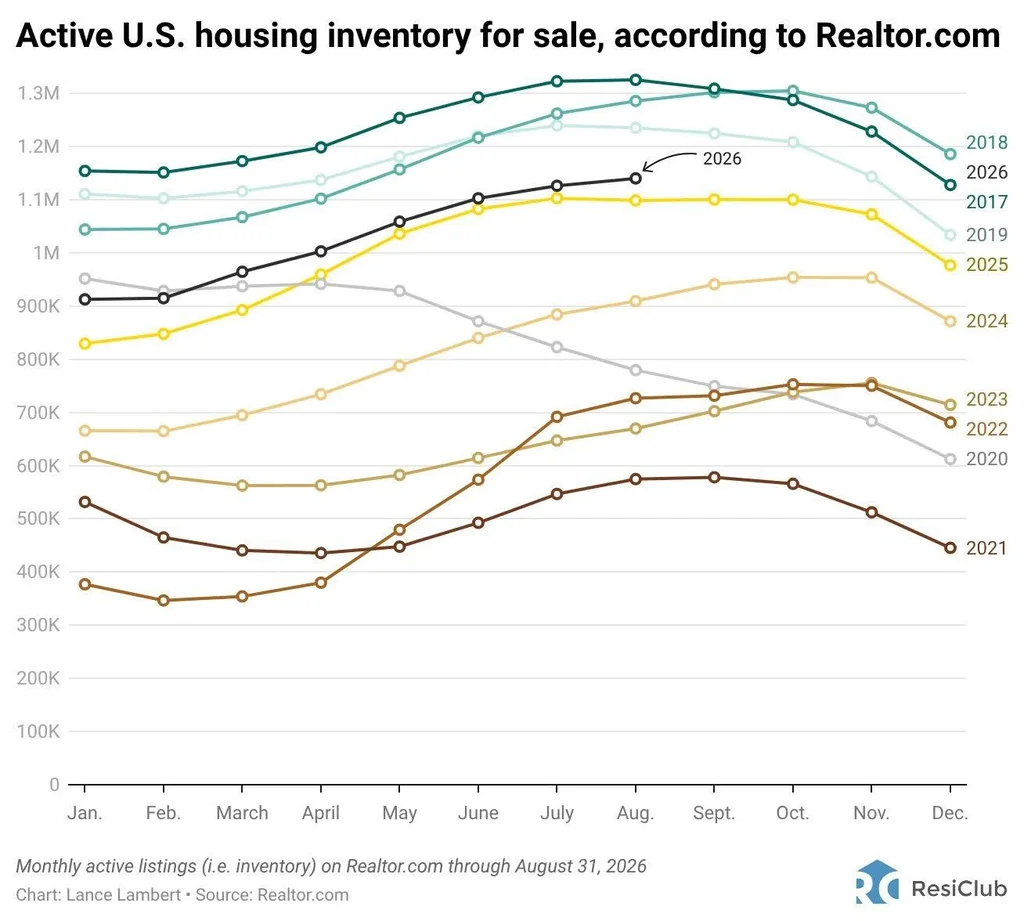
Eighteen U.S. states have now exceeded their pre-pandemic 2019 active housing inventory levels by the end of August 2026. These states span across the country, including Alabama, Arizona, Arkansas, Colorado, Florida, Georgia, Hawaii, Idaho, Nebraska, Nevada, North Carolina, Oklahoma, Oregon, South Carolina, Tennessee, Texas, Utah, and Washington. The District of Columbia has also surpassed its 2019 inventory benchmark.
Nationally, the housing market's active inventory still trails August 2019 levels by 7.7 percent. However, the pace of inventory growth has slowed considerably over the past year, with an increase of 41,354 active listings between August 2025 and August 2026, a significant deceleration from the 189,337 listings added between August 2024 and 2025. This slowdown occurs even as long-term yields and mortgage rates have climbed back to 52-week highs.
Regional market dynamics show considerable divergence. While many Sun Belt and Mountain West markets, including metro areas like Punta Gorda and Austin, have returned to or surpassed pre-pandemic inventory levels, Florida has experienced a slight year-over-year decrease in active inventory (-12%), despite being an epicenter of market weakness for the past two years.
Conversely, markets in the Midwest and Northeast remain tight, with home sellers in these regions historically holding more leverage than their counterparts in many Southern markets. National home prices have remained relatively flat year-over-year. However, while some Sun Belt areas are seeing price declines, a significant portion of Northeast and Midwest markets are still recording modest year-over-year gains. Builders in southern regions have been offering incentives and discounts, impacting the resale market as well.