Accidental Landlords Increase in Housing Markets With Falling Prices
Falling home prices are pushing sellers to consider renting out properties instead of selling. This trend is leading to a rise in 'accidental landlords' in markets with decreased demand.
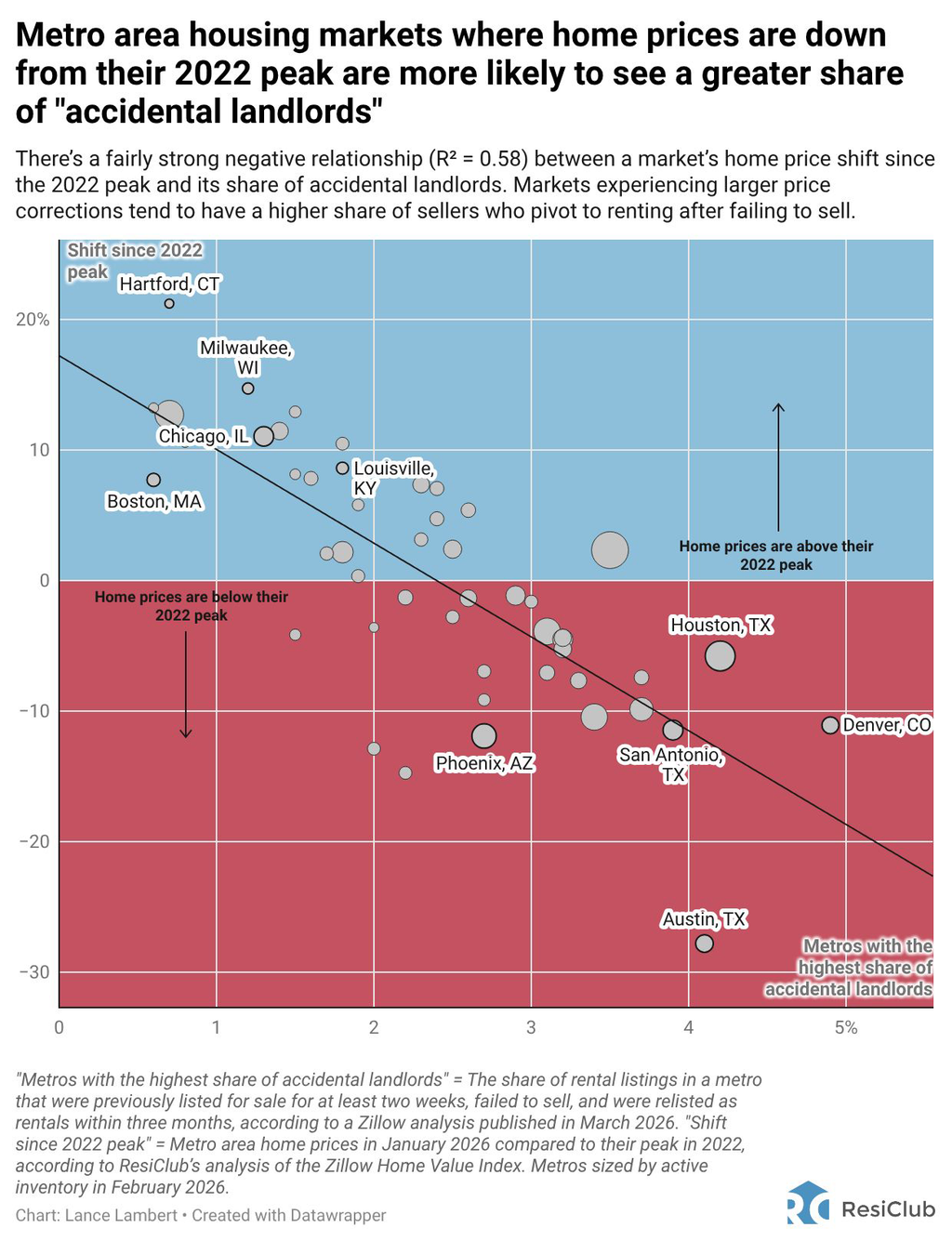
The number of "accidental landlords" – homeowners who are compelled to rent out their properties instead of selling – is increasing in housing markets experiencing price declines. This phenomenon is particularly noticeable in areas where home prices have seen significant corrections from their peak values.
Analysis indicates that markets with the largest home price drops are seeing a greater tendency for sellers to convert their properties into rentals. This decision often stems from a reluctance to accept offers perceived as too low, making renting a preferable alternative to a substantial price reduction.
However, becoming an "accidental landlord" also presents tax considerations. While profits from a primary home sale may be excluded from capital gains tax under certain conditions, depreciation recapture during the rental period can be taxed separately at a federal rate of up to 25%. This tax implication can be a surprise to many.
Among major metropolitan areas, Denver, Houston, and Austin show the highest shares of "accidental landlord" listings. Conversely, Boston, Providence, and New York have lower shares. This pattern reflects broader market dynamics where increased inventory leads to greater competition for sellers.