AI Assistants Lead to Naming Challenges for Tech Companies
Tech companies face difficulties finding unique and distinctive names for new agentic AI, as generative AI tools produce similar suggestions, leading to crowded naming "red oceans."
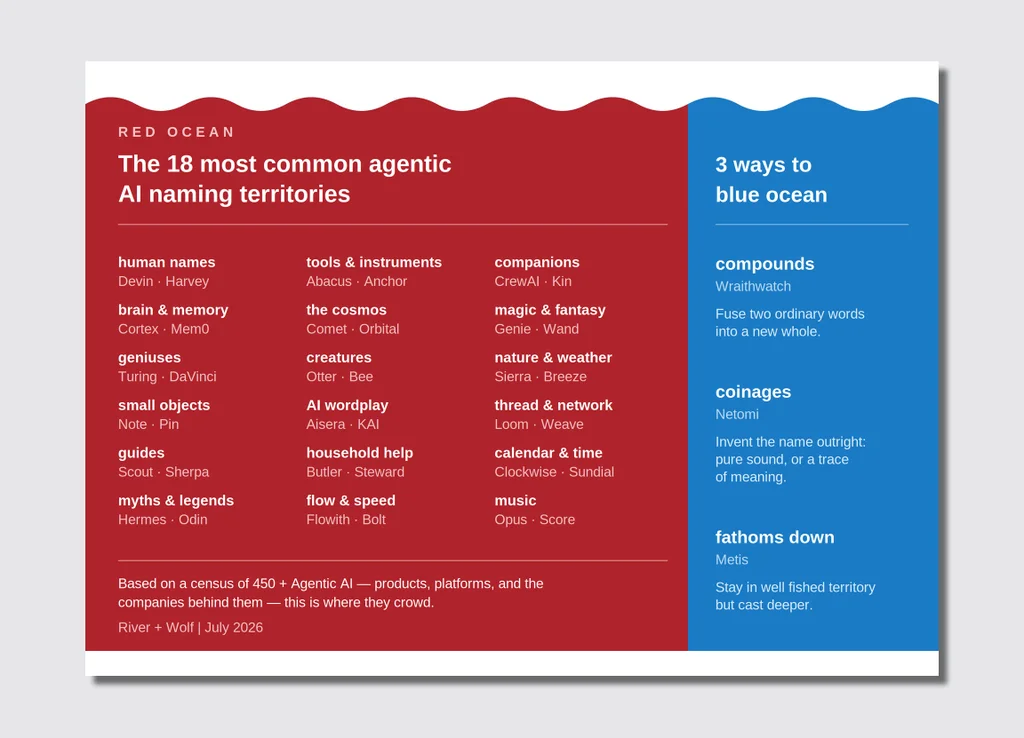
The proliferation of generative AI tools has made it easier to produce lists of potential product names, but this ease has created a significant challenge for tech companies: finding distinctive and legally available names for agentic AI, such as AI assistants and copilots. The core problem is not name generation but name selection in an increasingly crowded market.
Agentic AI, encompassing assistants and copilots, is a rapidly developing field with no settled terminology. While tools like Prosus and Dealroom have identified over 1,500 AI agents, naming suggestions from generative AI often fall into a limited number of recurring territories. This is because AI models learn from existing text, replicating familiar naming conventions and leading to suggestions that resemble what is already established.
This situation forces companies to navigate "red oceans" of competition, characterized by sameness and potential trademark conflicts. To escape this, companies are exploring strategies such as compounding ordinary words to create distinct terms, like Moveworks, or using adjective-noun combinations, as seen with TinyFish. However, they must avoid overused suffixes like "mind" or "bot" which are often deemed descriptive and difficult to trademark.
Another approach involves creating coined or invented names, akin to Kodak. These abstract names offer a blank slate for branding but can be challenging for consumers to connect with initially. A more common strategy is creating "trace names," which subtly incorporate elements of existing words or concepts, providing a familiar yet unique identity.
Examples of trace names include Nvidia, derived from an internal file label, and Gradium, which combines a technical term with a suffix suggesting a mined element. These names aim to achieve distinctiveness and trademarkability while remaining accessible to the target market, offering a path to "bluer waters" in the competitive AI landscape.