AI Redefining Data Center Infrastructure in 2026
Artificial intelligence (AI) is reshaping data center infrastructure in 2026, impacting cooling, edge computing, and management systems. Energy constraints and regional growth are key drivers.
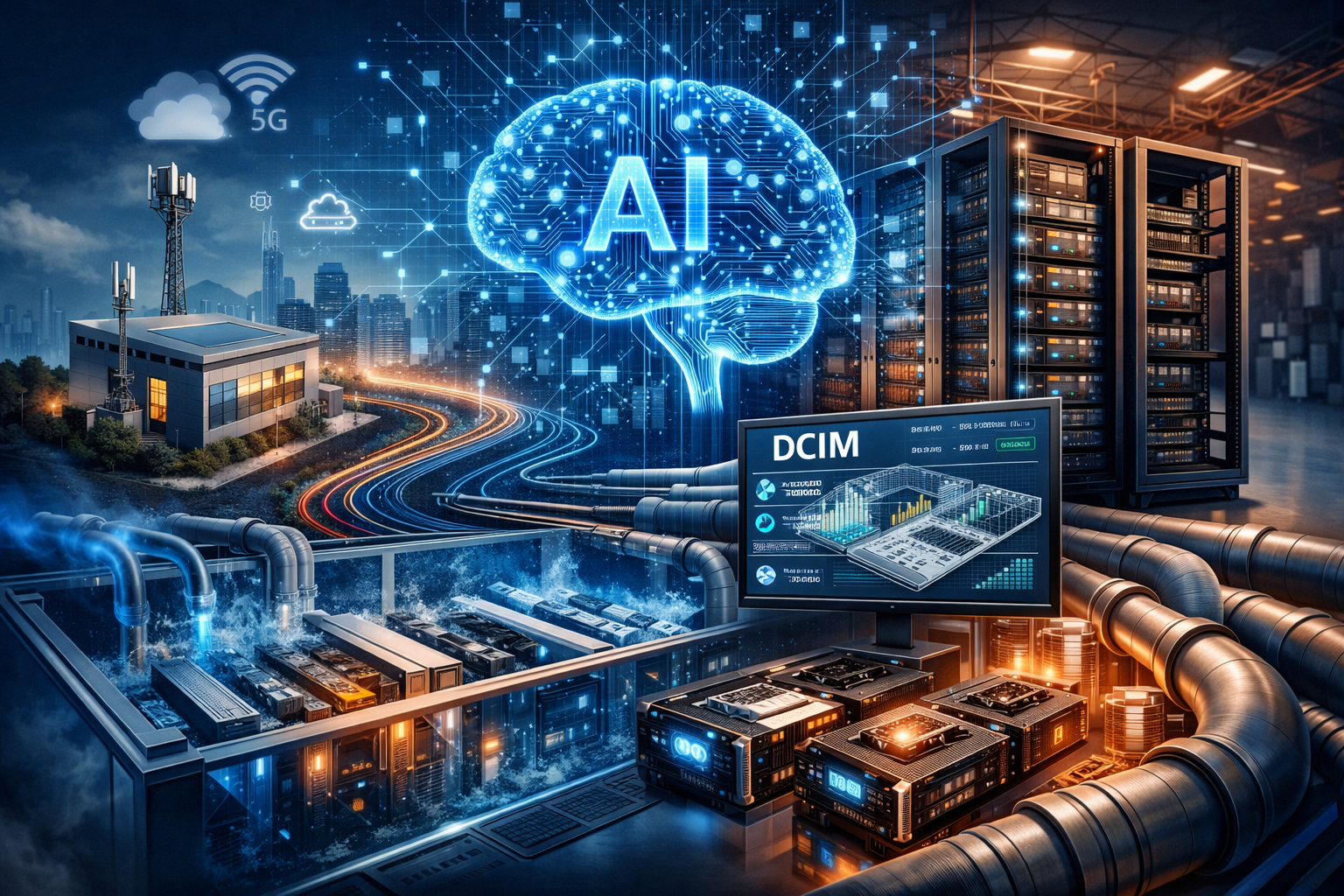
Artificial intelligence (AI) is significantly transforming data center infrastructure in 2026, with specific impacts on cooling systems, the expansion of edge computing, rack configurations, and Data Center Infrastructure Management (DCIM).
A primary industry trend is the growing constraint of energy availability. The International Energy Agency (IEA) reports that renewable energy sources are the fastest-growing electricity generation for data centers, expected to meet nearly 50% of demand growth through 2030.
Regional expansion is also accelerating. For instance, Amazon is investing €33.7 billion in Spain to expand its cloud and AI infrastructure. In India, Princeton Digital Group is increasing its total capacity to 1 GW, highlighting the country's rapid development as a market for AI-ready data centers. Oracle has also expanded its cloud services to Morocco, indicating a broader geographical spread of cloud infrastructure beyond traditional hubs.
The performance demands of AI are shifting the bottleneck from traditional processors to the physical infrastructure of the data center. High-density computing environments necessitate new solutions for power distribution, thermal management, airflow design, and reliability. This increased interdependence between different data center components underscores the importance of integrated infrastructure management systems.
Conventional air cooling is no longer sufficient for AI-driven data centers. Cooling has become a strategic decision influencing investments from the initial design phase. Liquid cooling solutions and other advanced technologies are becoming crucial for maintaining performance and energy efficiency in an increasingly demanding data center environment.