AIKO's Solar Modules Enhance Safety Amid Europe's Heatwaves
AIKO's new generation of solar modules are designed for improved performance and safety in high-temperature conditions, mitigating overheating risks.
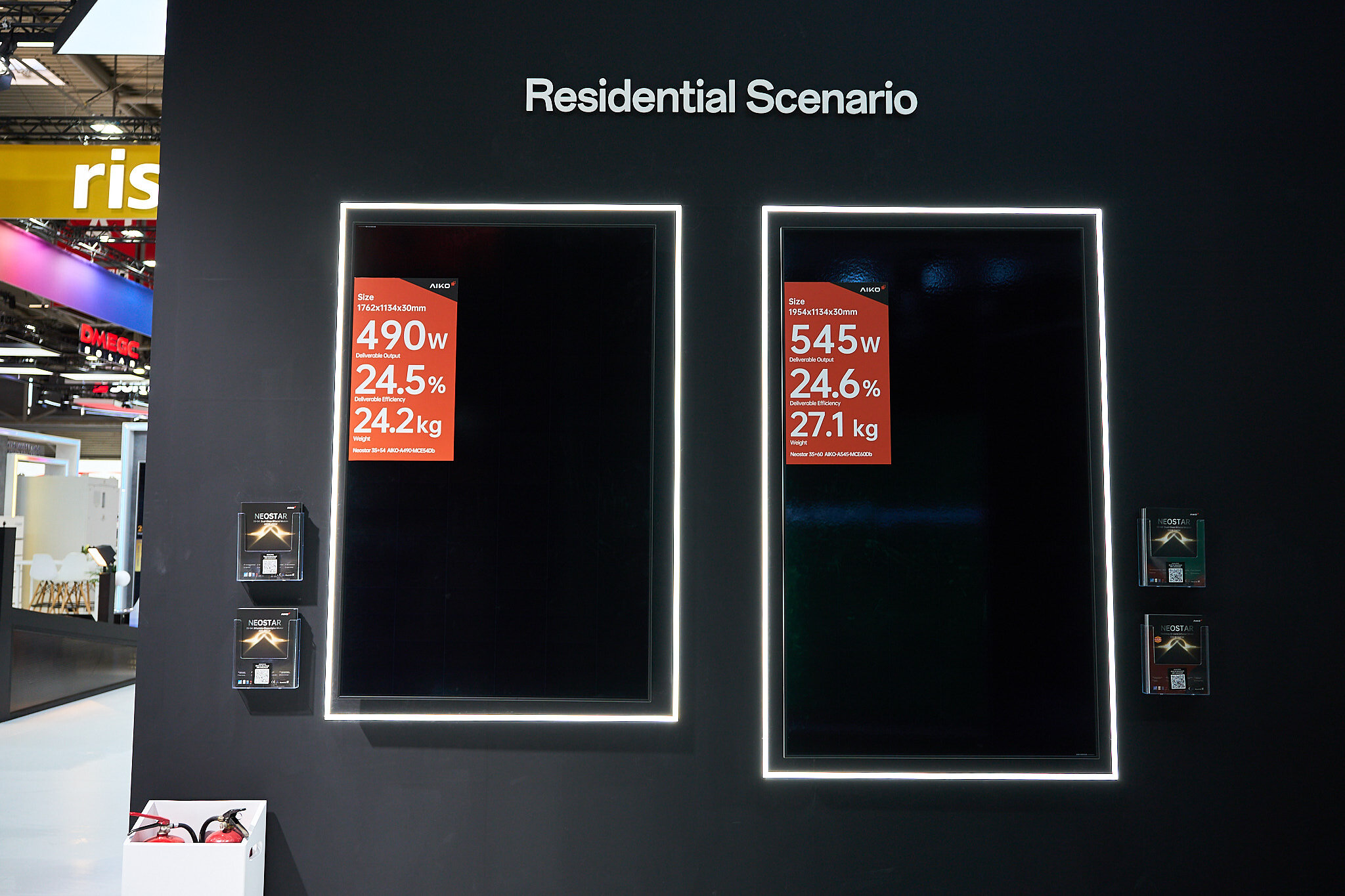
Europe is experiencing increasingly frequent and intense heatwaves, posing new challenges for energy infrastructure. Solar photovoltaic installations, as they expand across the continent, are particularly tested by these extreme climate conditions.
Historically, innovation in photovoltaic technology has primarily focused on energy output and cost reduction. However, as operating environments become more demanding, safety is emerging as a critical criterion for evaluating module performance.
AIKO's ABC (All Back Contact) modules are garnering attention not only for their high efficiency and aesthetic appeal but also for their exceptional safety performance. The company is the first to have its photovoltaic modules achieve the "PV Module Anti-Ignition Hazard" certification from TÜV Rheinland. Under TÜV Rheinland's enhanced testing conditions, the ABC modules recorded over 35 percent lower hot spot temperatures compared to traditional modules, significantly reducing the risk of thermal runaway.
The ABC technology is engineered to effectively limit hot spot temperatures below 100°C under relevant operating conditions, thereby reducing thermal stress and mitigating potential ignition hazards. This enhanced safety was also demonstrated in comparative shading tests, where the ABC modules consistently maintained significantly lower hot spot temperatures than conventional modules. "Hot spots" can develop when partial shading, microcracks, or other internal defects disrupt normal current flow within a module. When a portion of a cell is shaded, its current-producing capacity decreases. Because cells are interconnected, the affected area can become reverse-biased, causing localized electrical energy dissipation as heat. If this localized heating persists, temperatures can rise rapidly, accelerating material degradation and, in severe cases, leading to fire risks.
AIKO's ABC modules address these risks through two key design advantages. A cell-level bypass diode-like function enhances current flow during partial shading events. When part of a cell is shaded, the architecture provides alternative pathways for current to redistribute around the affected area, rather than concentrating electrical stress and power dissipation in one spot. By reducing localized energy dissipation, this design limits excessive temperature increases at hot spots and improves thermal safety during partial shading. AIKO's copper interconnection technology further reduces the risk of hot spots associated with microcracks by using pure copper grids directly bonded to the silicon wafer, offering a more robust and mechanically resilient cell structure compared to traditional silver paste metallization.