Alstom and SNCF TGV Teams to Receive Elmer A. Sperry Award
Alstom and French national railway company SNCF will be honored with the Elmer A. Sperry Award in November 2001 for their contributions to the TGV high-speed rail system.
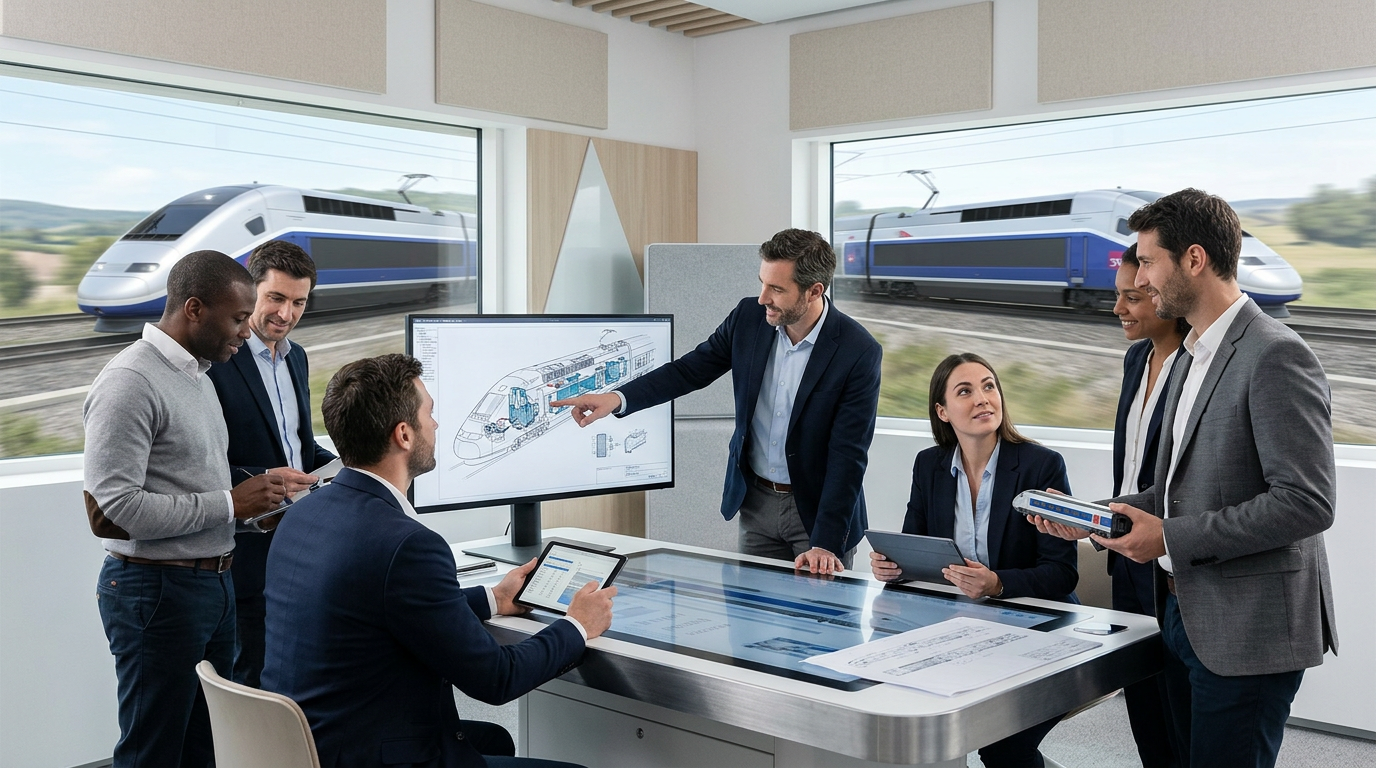
The teams responsible for the development of the TGV high-speed rail system, from Alstom and the French national railway company SNCF, are set to receive the Elmer A. Sperry Award in November 2001. The award recognizes significant engineering contributions that have advanced transportation technology.
The presentation will take place during the American Society of Mechanical Engineers (ASME) International Mechanical Engineering Congress and Exposition in New York. Jean-Pierre Loubinoux will accept the award on behalf of SNCF, and Michel Moreau will represent Alstom. The Elmer A. Sperry Award, established in 1955, honors advancements proven in actual service across land, sea, or air transport.
Between 1965 and 1981, SNCF focused on conceiving and creating the initial TGV system, while Alstom played a key role in constructing the trains themselves. The project introduced several key innovations, including dedicated high-speed lines, articulated train sets, and the integration of proven technologies like continuously welded rails and 25,000 V overhead catenary systems.
Design considerations for the trains included a maximum 17-ton axle load, fixed train formations, and articulated passenger coaches for reduced weight and enhanced comfort. The use of two power cars enabled high speeds and the ability to navigate steep gradients. The first TGV entered service between Paris and southeastern France in September 1981.
The TGV system proved to be a swift operational, economic, and technical success. Within ten months, it had carried its 10 millionth passenger. Operating at 270 km/h, it positioned rail travel as a competitive alternative to cars and air travel, while retaining rail's inherent advantages of safety, comfort, and cost-effectiveness. Subsequent generations of TGV have further increased speeds and passenger comfort.