Alstom's Hesop system captures train braking energy
Alstom has developed the Hesop system to improve the energy efficiency of trains by capturing and reusing braking energy. The technology aims to reduce both energy consumption and operational costs.
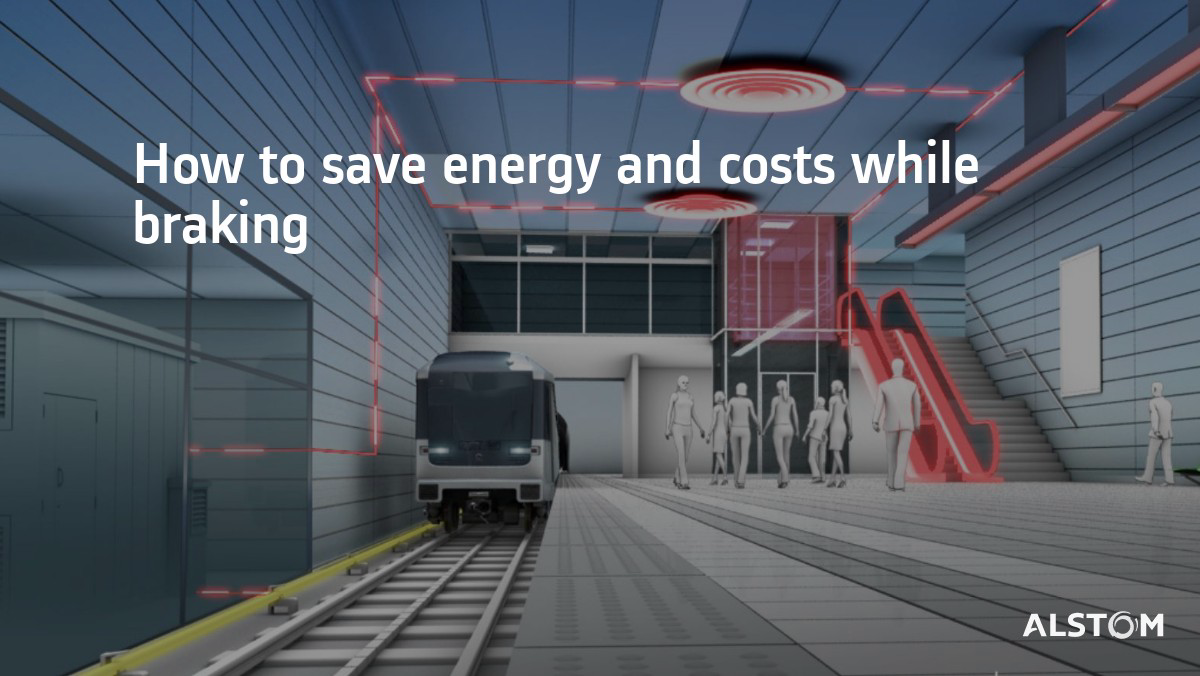
Transport company Alstom has introduced its Hesop project, designed to enhance energy efficiency in trains through the intelligent use of braking energy. This technology is specifically targeted at metro, tramway, and suburban DC rail operations.
During typical train braking, kinetic energy is converted into electricity. However, a significant portion is lost as heat through braking resistors. Ignacio Rodriguez, Alstom's Vice President of Infrastructure and Telecommunications, notes that up to 15% of this energy can be wasted. Hesop aims to address this inefficiency.
The Hesop system functions as a reversible substation power converter, installed between the public energy grid and the train's overhead line or third rail. It can be retrofitted to existing infrastructure or integrated into new networks. The system captures over 99% of the available braking energy. This recovered energy can be reused by other traction substations, to power station facilities like escalators and lighting, or be sold back to energy distributors.
According to Alstom, Hesop leads to reduced energy consumption and lower carbon dioxide emissions. Additionally, by decreasing heat dissipation from braking resistors, it lessens the need for tunnel and station ventilation. The system is already deployed on ten lines across nine countries, with market demand reportedly increasing.