Appeals Court Rules States Can Enforce Gambling Laws Against Kalshi
A federal appeals court has ruled that states can enforce their gambling laws against prediction market Kalshi, rejecting the company's claim of exclusive federal jurisdiction. The decision favors Ohio and Tennessee.
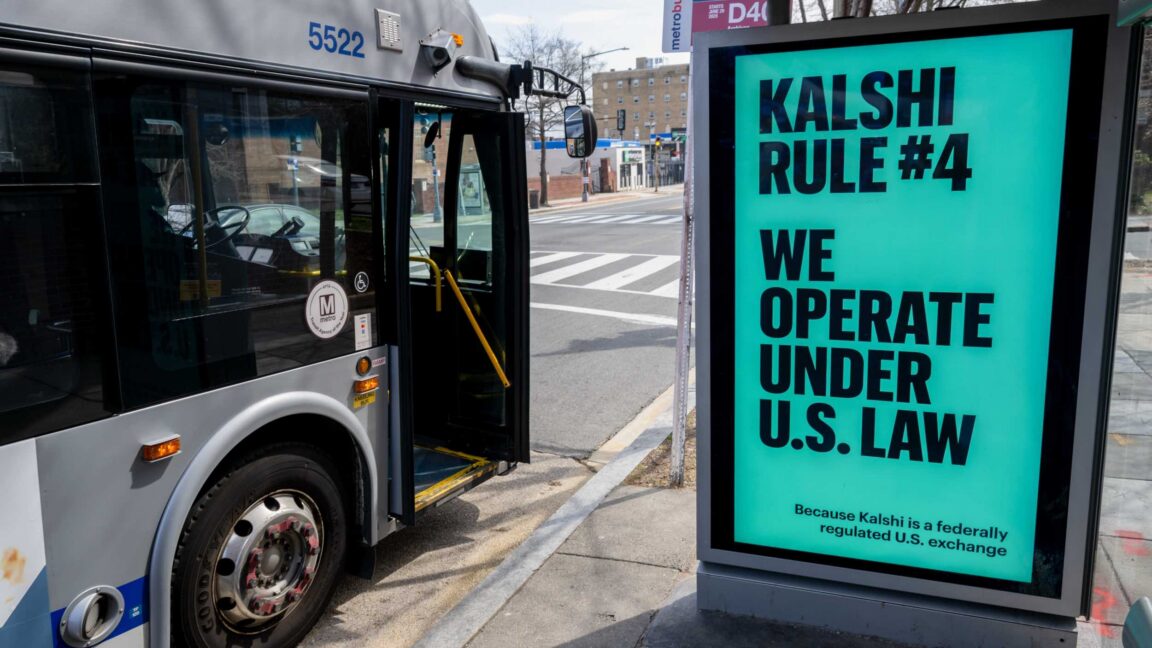
The US Court of Appeals for the Sixth Circuit has ruled against prediction market Kalshi for a second time, affirming that states can enforce their gambling laws against the platform. The unanimous decision by a three-judge panel rejects Kalshi's assertion that its operations are solely under the jurisdiction of the US Commodity Futures Trading Commission (CFTC).
The court found that contracts offered on Kalshi, related to sports events, do not meet the legal definition of "swaps." This classification is significant because "swaps" fall under the exclusive jurisdiction of the CFTC. By determining they are not "swaps," the court allows state gambling laws to apply.
Furthermore, the judges ruled that even if Kalshi's contracts were considered "swaps," the Commodity Exchange Act (CEA) does not preempt, or override, state gambling laws. This means Kalshi cannot rely on federal law to shield its operations from state-level regulation.
"We hold that Kalshi has not shown that its sports-event contracts satisfy the statutory definition of a 'swap' so as to fall within the scope of the CFTC's 'exclusive jurisdiction,'" wrote Judge Julia Smith Gibbons. "And, even assuming that Kalshi’s sports-event contracts are swaps, we alternatively hold that the CEA neither expressly nor impliedly preempts Ohio’s or Tennessee’s gambling laws."