Application Replacement Requires Onboarding and Sunsetting Strategies, Finds Info-Tech
Organizations often fail to derive full value from new application deployments because they neglect user onboarding and the systematic retirement of legacy systems, according to Info-Tech Research Group.
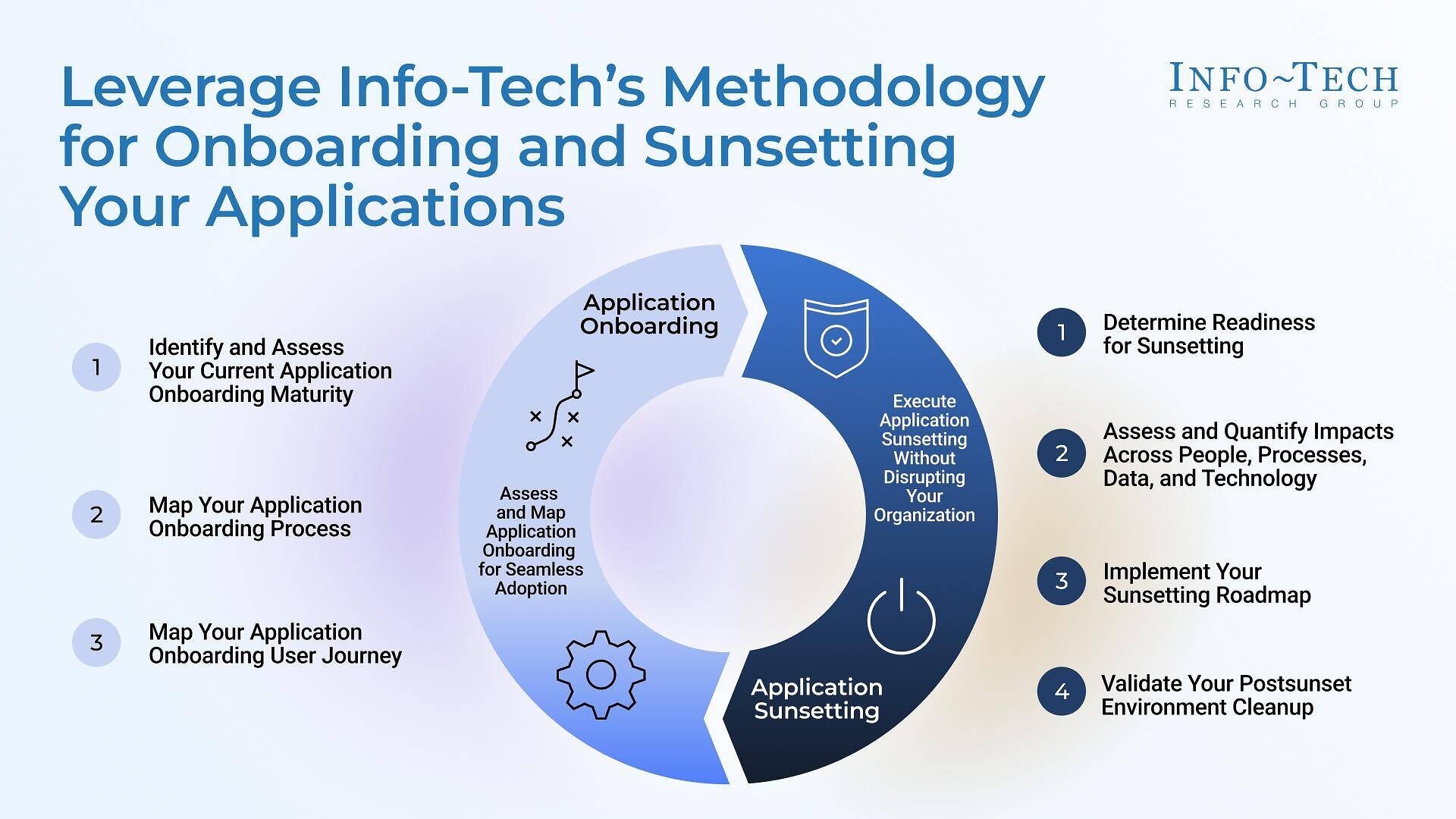
Many organizations approach application replacement solely as a technical upgrade, overlooking critical phases like user onboarding and the systematic retirement of legacy systems. This oversight can lead to increased risks and diminished value from new deployments, according to research from Info-Tech Research Group.
The firm's "Master Systematic Application Replacement With a Fit-for-Purpose Plan" blueprint offers a structured methodology to address the entire application lifecycle. It provides guidance on assessing onboarding maturity, aligning stakeholders, and planning the user journey for new systems, as well as strategies for identifying risks and dependencies during the decommissioning of older applications.
"Application onboarding sets the tone for the entire lifecycle, shaping how users adopt, engage with, and ultimately realize value from a new system," stated Jinit Shah, research analyst at Info-Tech Research Group. "By focusing on early outcomes and aligning cross-functional teams, organizations can accelerate time-to-value and improve long-term success."
The report outlines a two-phase framework. Phase 1 focuses on assessing and mapping application onboarding to ensure seamless adoption by evaluating current maturity and user needs. Phase 2 addresses the planning and execution of application sunsetting to retire legacy systems without disruption, involving risk assessment and roadmap creation.
Info-Tech emphasizes that without a well-defined sunsetting strategy, organizations face potential disruptions, data issues, and lingering dependencies that hinder transformation efforts. Proper decommissioning requires a controlled transition that protects data and minimizes risk. By applying this lifecycle approach, organizations can improve user adoption, reduce operational risks, and ensure legacy systems are retired effectively.