Archaeologist Studies Human Evolution Through Microscopic Traces
Archaeologist Bárbara Rodriguez Álvarez from the Senckenberg Centre for Human Evolution and Palaeoenvironment explains her work examining traces of the past. Her research contributes to understanding human evolution.
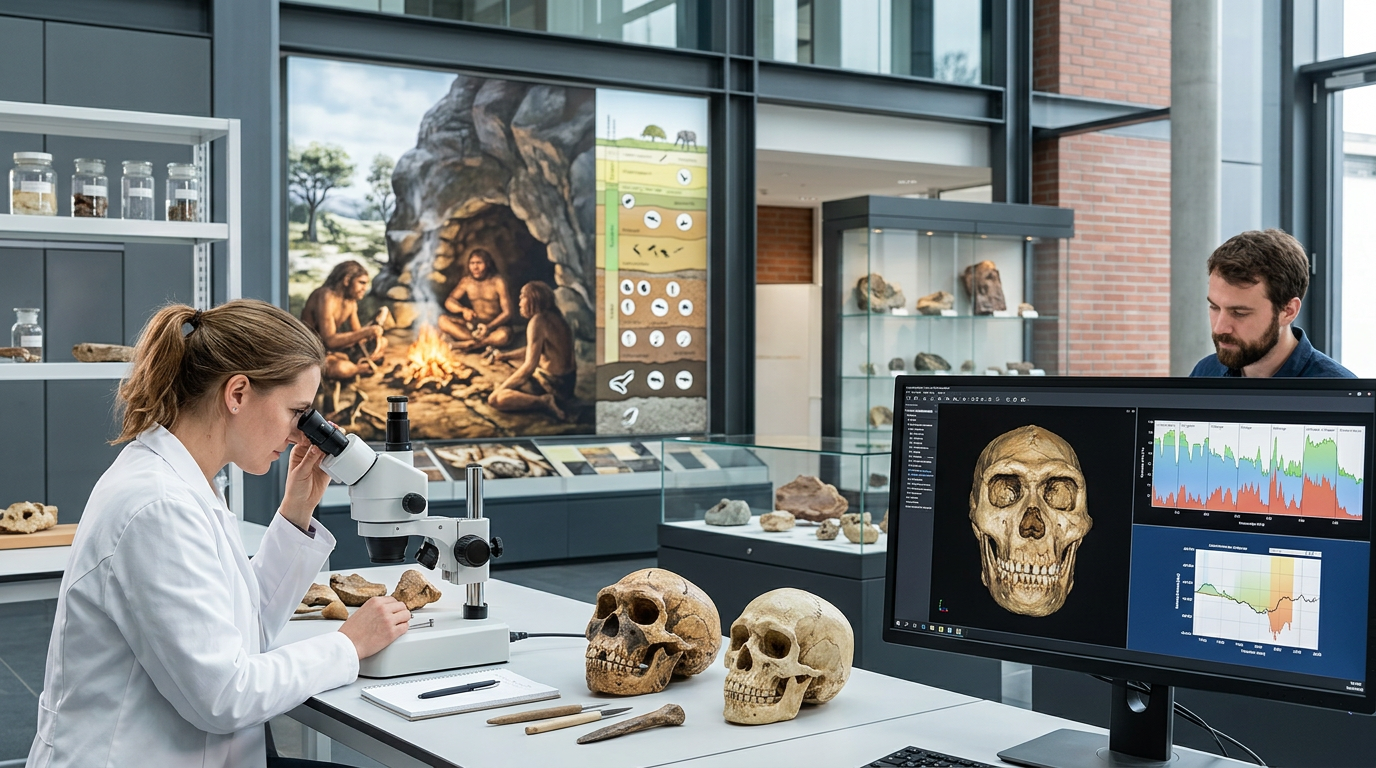
Frankfurt – Archaeologist Bárbara Rodriguez Álvarez at the Senckenberg Centre for Human Evolution and Palaeoenvironment delves into the past by studying fossils and the microscopic traces found on human remains.
Rodriguez Álvarez's interest in archaeology began in childhood after receiving an ammonite fossil from her father. While Steven Spielberg's "Jurassic Park" also sparked her imagination, she found herself particularly drawn to the subtle clues and imprints left by early humans, shedding light on the evolution of hominins, our direct ancestors.
She emphasizes that even the smallest traces can carry a vast amount of information. By piecing together these fragments, she reconstructs the picture of past societies, sometimes dating back hundreds of thousands of years.
At the Senckenberg Centre, her work combines archaeological methods with contemporary research to understand human development and the shaping of modern humans.