Ars Technica highlights science stories
Ars Technica has compiled a list of significant science stories that were nearly overlooked, covering potential dark matter detection and particle physics experiments.
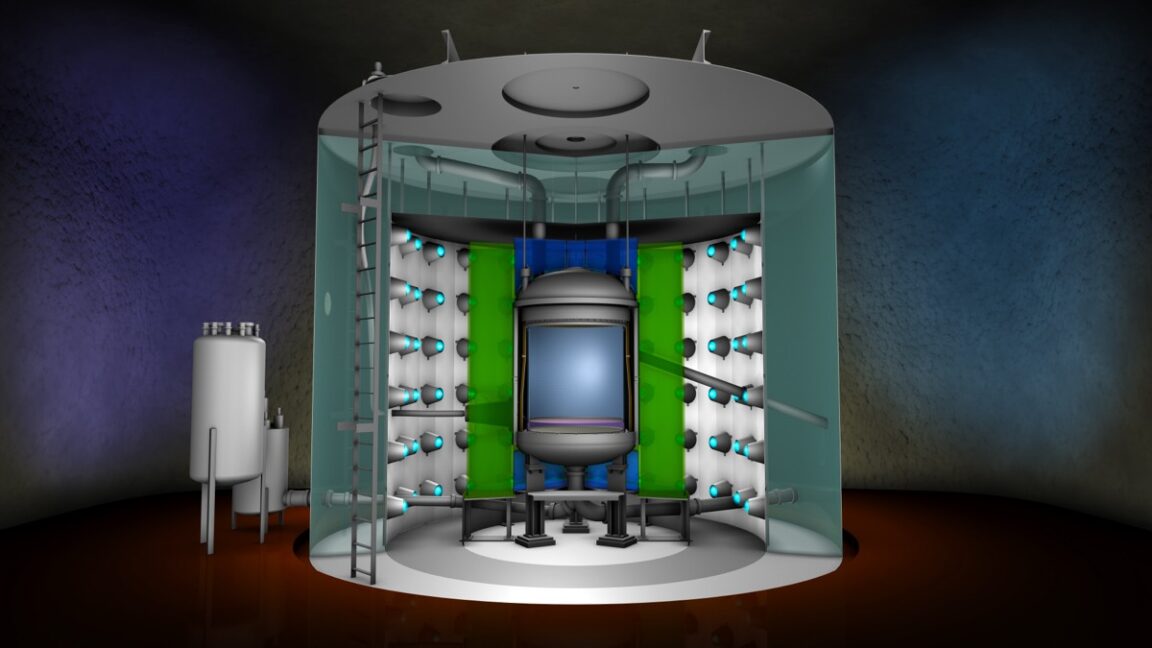
Ars Technica has brought attention to six scientific stories that might have been missed in September. These topics span the search for dark matter, particle physics experiments, and even archaeological findings.
Research at the LUX-ZEPLIN detector may offer the first hint of dark matter. Dark matter is believed to constitute roughly 85 percent of the universe's matter, with weakly interacting massive particles (WIMPs) being the leading candidate. While the signal is subtle and requires further verification, its reporting has generated interest within the physics community. The results were presented at a conference in Japan and are available as a preprint.
Other highlighted subjects include experiments at the Large Hadron Collider (LHC) investigating entangled Z bosons. The selection also touches upon the potential use of psychoactive substances during the Late Pleistocene epoch and an intriguing technical description of a telescope attributed to Galileo Galilei.
The announcement from LUX-ZEPLIN includes strong caveats, as the signal is below the threshold needed to confirm a discovery. However, researchers decided to report their findings due to their inability to otherwise account for the event. Data collection is ongoing at the LUX-ZEPLIN detector and other similar facilities globally.
Ars Technica emphasizes the ongoing nature of scientific discovery and the importance of surfacing intriguing research, even if it doesn't immediately garner widespread attention. This roundup provides a glimpse into current scientific endeavors.