Autonomous Mobile Robots Transform Warehouse Operations
Autonomous mobile robots (AMRs) are increasingly deployed in warehouses to address labor shortages and e-commerce growth challenges. Analyst Quadrant Knowledge Solutions elaborates on the trend.
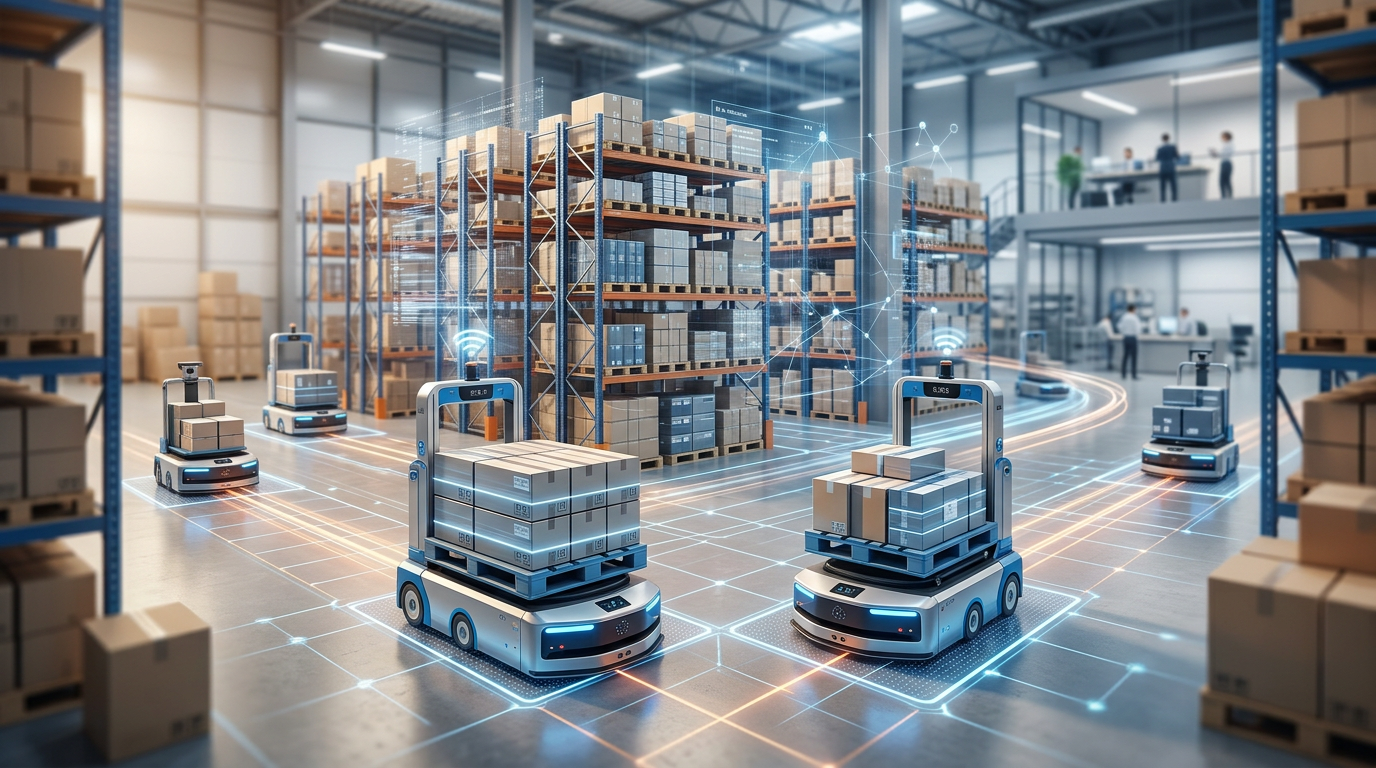
Autonomous mobile robots (AMRs) are seeing increased deployment in warehouses and distribution centers to combat labor shortages and meet the demands of a growing e-commerce sector. Rajabahadur V. Arcot, Senior Advisor and Consultant at Quadrant Knowledge Solutions, discusses the transformative impact of this technology.
AMRs are taking over routine and sometimes hazardous tasks, allowing human workers to focus on more value-added activities. While the need for automation has long existed, the development of autonomous mobility has accelerated adoption. E-commerce expansion and pandemic-related shifts have further fueled demand for AMR solutions.
Many suppliers offer AMRs through Robotics-as-a-Service (RaaS) or leasing models. This allows companies to pilot robotic automation without significant upfront capital expenditure, reducing initial investment and ongoing maintenance costs.
These robots enhance operational quality by reducing errors in repetitive tasks and increase efficiency through human-robot collaboration. They also help alleviate labor shortages and can improve inventory management accuracy and speed, particularly when equipped with technologies like RFID.
The adoption of AMR technology in warehouses promises significant improvements in efficiency, productivity, and competitiveness, while addressing the sector's evolving challenges.