Bacterial Material Used for Lampshades
Mexican biotech company Polybion is using bacterial cellulose, grown from fruit waste, for lampshades in its new lighting system. The material required over a decade of research and development.
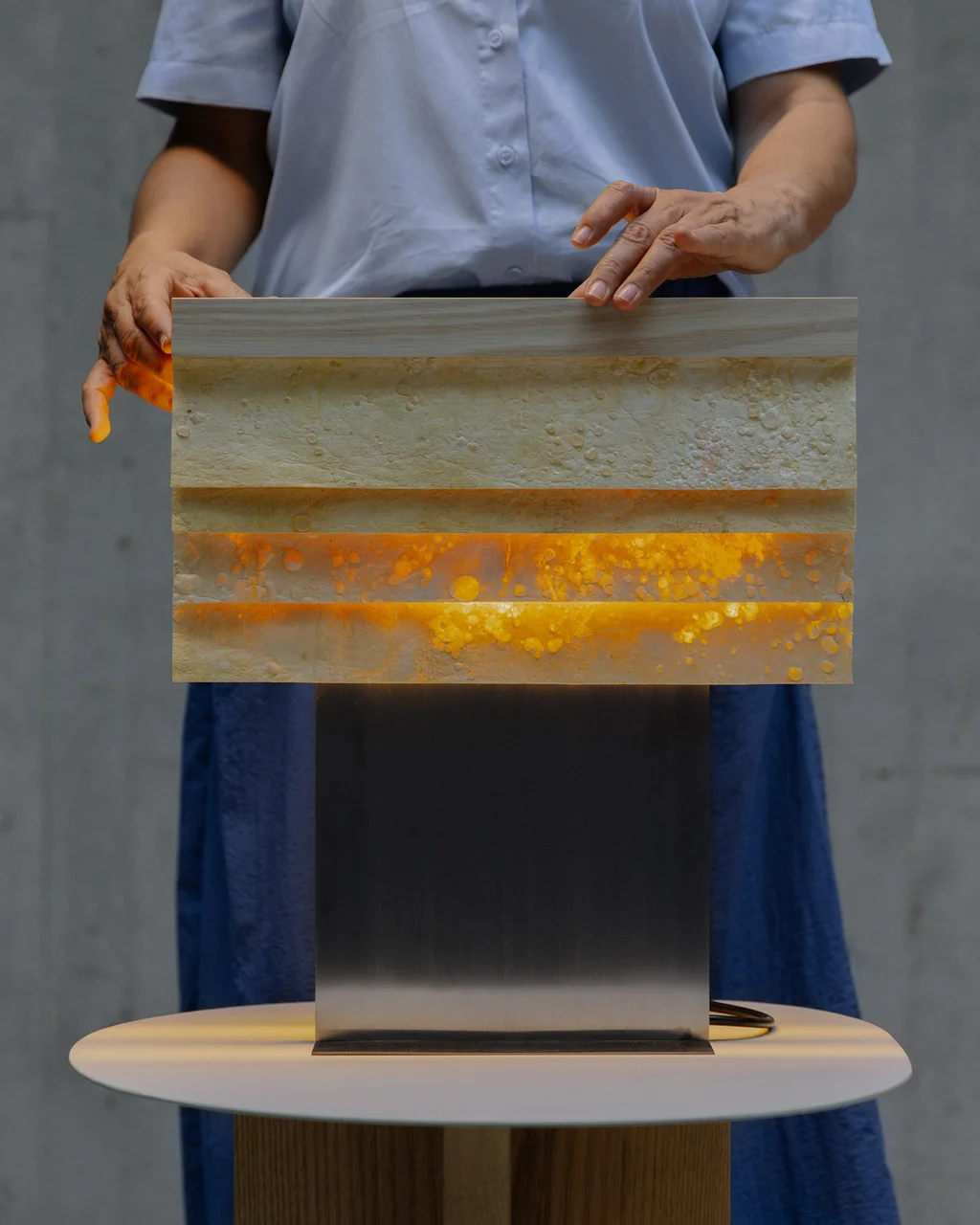
Mexican biotech company Polybion has developed a lighting system featuring lampshades grown from bacteria. The Cenit collection utilizes a biomaterial called Celium, produced by cultivating bacteria with agro-industrial fruit waste.
Development of Celium took more than 10 years, according to Polybion co-founder Alexis Gómez-Ortigoza. The process converts fruit waste into a growth medium for bacteria. As the bacteria grow, they assemble natural biopolymer, bacterial cellulose, which is then refined for consumer product applications.
The material comes in two finishes: Manto, which is lightweight and translucent, and Espumante, which is fuller and foam-like. In the Cenit lamps, the Celium shades hang from a natural ash wood structure in layered sheets, emitting a warm glow.
Each Cenit lamp is made to order and takes approximately five weeks to produce. Polybion suggests this demonstrates how fruit waste can be transformed into new, brighter products.