BepiColombo spacecraft nears Mercury after eight-year journey
The European Space Agency's BepiColombo mission has reached a critical milestone in its final approach to Mercury, eight years after its launch. The spacecraft is preparing to enter orbit around the planet.
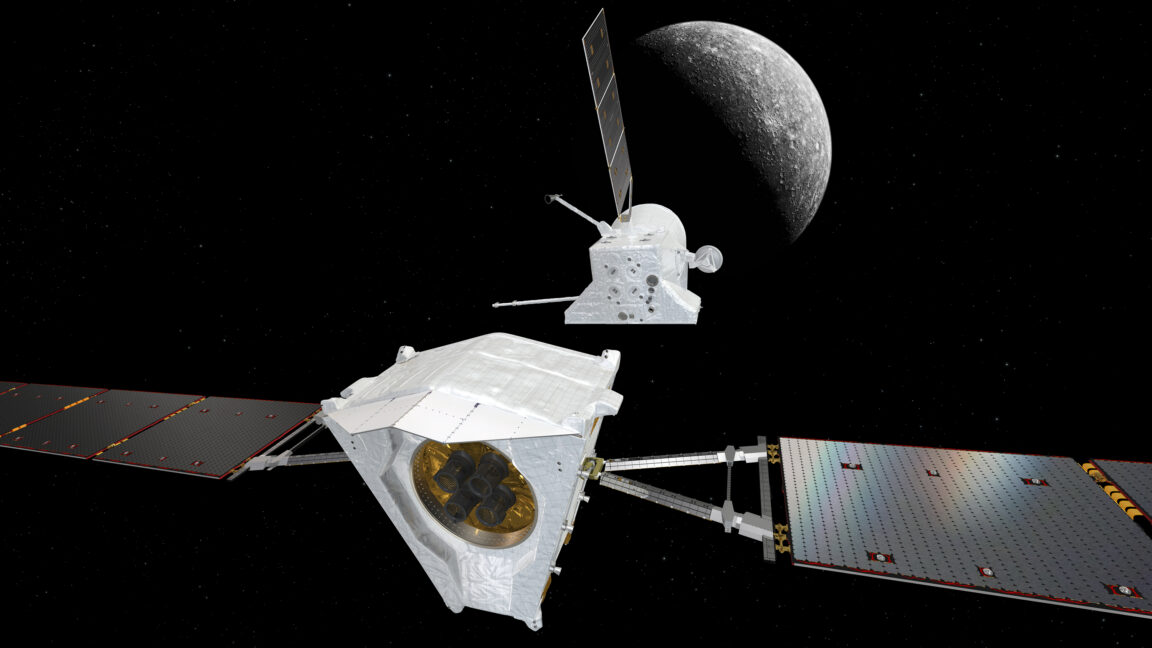
The European Space Agency's (ESA) BepiColombo mission has achieved a major milestone this week as it nears its destination, Mercury. After an eight-year interplanetary voyage costing nearly $2 billion, the robotic science probe is in the final stages of its journey to the innermost planet.
Launched in 2018, BepiColombo, a joint effort led by ESA with contributions from Japan and the United States, has been gradually spiraling closer to the Sun. This has been accomplished through a combination of electric propulsion and a series of gravity-assist flybys of Earth, Venus, and Mercury, which have precisely adjusted its velocity.
Upon its next encounter with Mercury, the spacecraft's speed will be optimized for the planet's gravity to capture it into orbit. Scientists involved in interplanetary missions often face long waits for scientific data; NASA's New Horizons took nearly a decade to reach Pluto. However, achieving orbit around Mercury requires a significant amount of energy, or delta-v, due to the planet's proximity to the Sun and the required orbital maneuvers.
The final orbital insertion burn is scheduled for later this year, after which BepiColombo will commence its scientific observations of Mercury, studying its unique environment and geology.