Bosch Hammer Drill's Impact on Construction History
Robert Bosch GmbH launched its hammer drill in 1932, an innovation that quickly became indispensable in the construction industry. The tool significantly improved efficiency and precision on job sites.
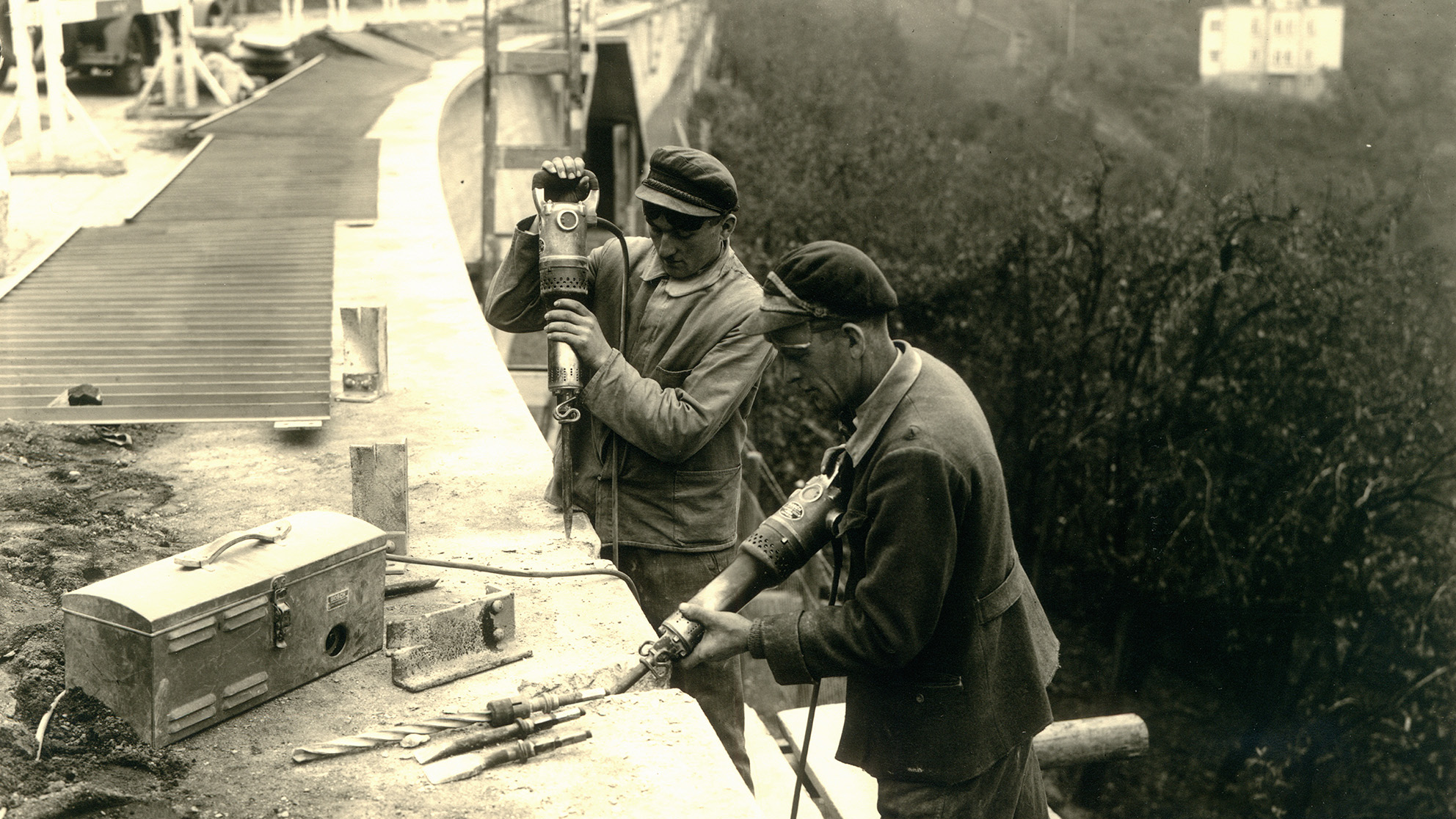
Robert Bosch GmbH introduced its hammer drill in 1932, a tool that rapidly established itself as essential for construction work worldwide. This development marked a significant step in power tool technology.
The introduction of the hammer drill occurred during a period when Bosch was diversifying its product lines due to economic challenges. The company acquired a patent for a combined hammer and rotary impact mechanism, enhancing drilling capabilities in hard materials.
This new tool allowed for faster drilling of cleaner, more precise holes compared to previous methods. Early applications included the installation of 1,200 anchor holes for railings on Stuttgart's Weinsteige and its use during the construction of the Berlin Olympic Stadium, significantly reducing labor time.
Beyond drilling, the Bosch hammer drill also functioned as a chisel, compactor, and vibrator. Its robustness, efficiency, and ability to connect to standard electrical outlets made it a valuable asset, saving time and effort for construction professionals and improving the quality of installations.