Bosch transformed manufacturing processes in the 1920s to reclaim market position
Faced with increased competition and economic volatility after World War I, Robert Bosch GmbH modernized its operations by transitioning to assembly-line production.
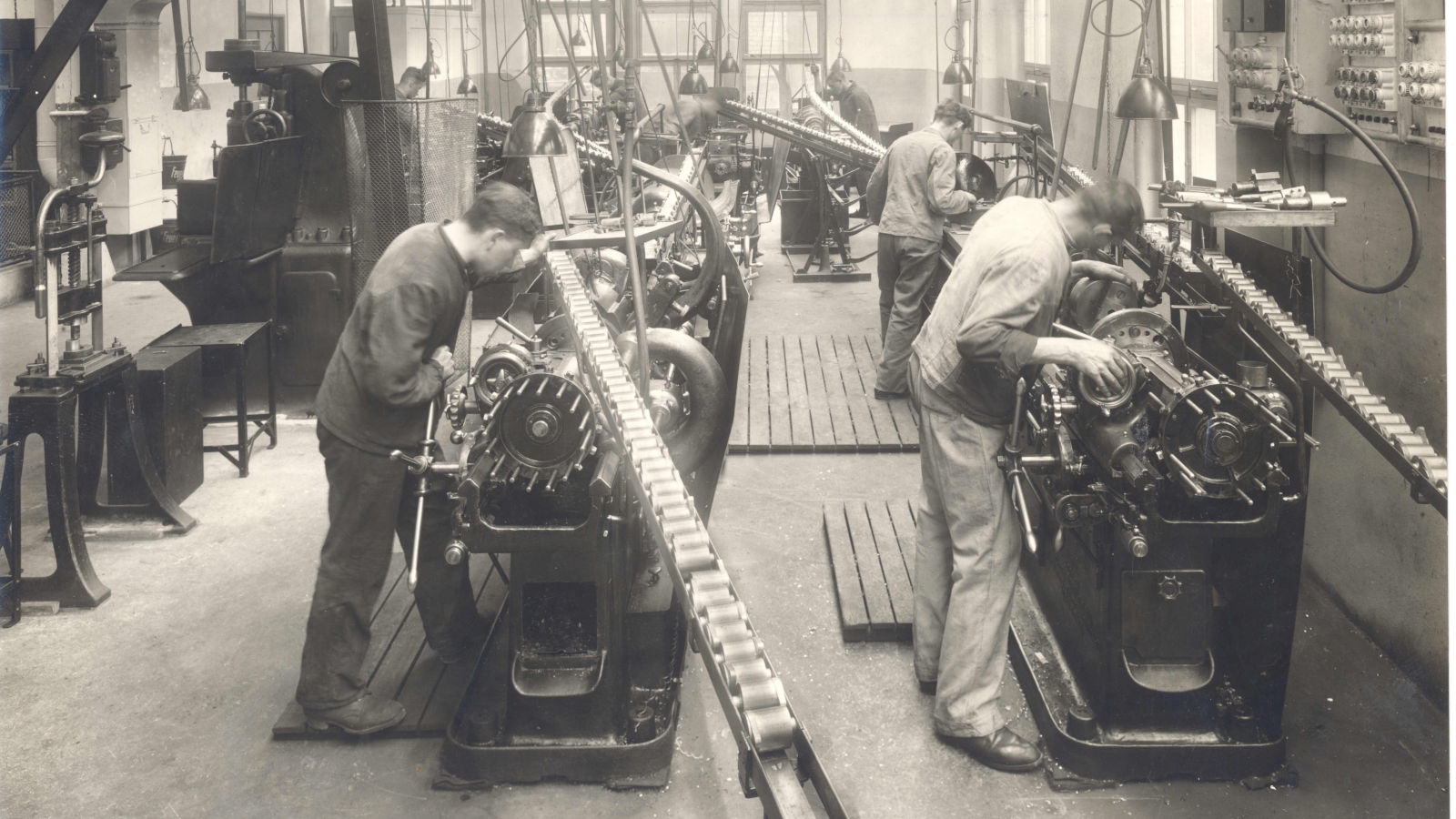
Beginning in 1923, Robert Bosch GmbH implemented a significant reorganization of its manufacturing facilities in Stuttgart. The company moved away from a workshop-based model—which relied on intermediate storage and inconsistent production cycles—to a more streamlined group manufacturing and assembly-line system.
Prior to this shift, Bosch utilized a fragmented process where components were milled and drilled in separate workshops before being moved to central warehouses, leading to long idle times and inefficient logistics. The post-World War I era, however, introduced fierce global competition, forcing Bosch to address rising costs and the need for higher production volumes.
Management adopted concepts from the American scientific management movement to optimize efficiency. By standardizing components and integrating sequential assembly steps, Bosch sought to reduce production lead times and costs, a shift that marked the company's entry into modern mass production methods.