Bosch's advertising history: from "red devil" mascot to unified branding
Robert Bosch GmbH initiated its advertising efforts in Stuttgart's daily press in February 1887. The company professionalized its advertising over time, commissioning artists and developing a consistent brand identity.
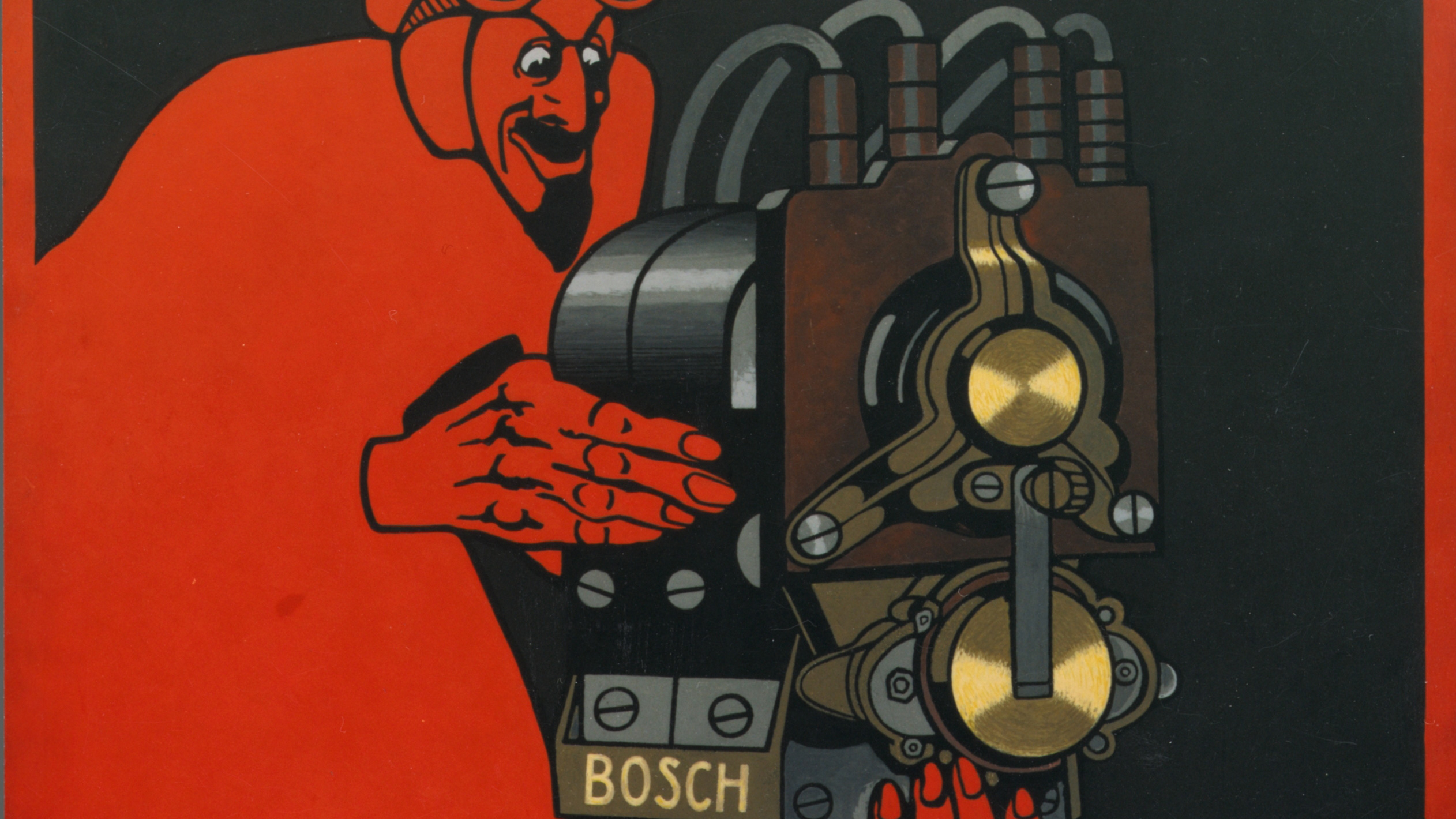
Robert Bosch GmbH placed its first advertisements in the Stuttgart daily press in February 1887, shortly after the company's founding. While founder Robert Bosch emphasized product quality as the primary selling point, the necessity of advertising for sales operations was quickly recognized.
A significant development occurred in the spring of 1906 when sales manager Hugo Borst spearheaded a large-scale advertising campaign in the United States for the company's main product at the time, the magneto ignition device. This campaign resulted in a substantial increase in sales, underscoring the effectiveness of advertising. Following this success, Bosch began commissioning well-known commercial artists to design posters and established a uniform visual identity for elements like shop window displays throughout the 1920s.
One notable early advertising element was the "red devil" mascot, created by artist Julius Klinger around 1909, inspired by the racing driver Camille Jenatzy. This mascot proved popular, particularly with American customers. However, its use was discontinued after World War I due to the expropriation of Bosch's U.S. assets and a subsequent claim on the mascot by a competing American company.
In the 1910s, Bosch adopted a more minimalist "Sachplakat" (product poster) style, influenced by commercial artist Lucian Bernhard. This approach focused on clear, direct product illustration with concise text. After World War I, Bosch introduced a new trademark: an armature within a circle, which remains in use today. Bernhard was also responsible for designing advertising materials that incorporated this new brand image.