Brain Imaging Research Distinguishes Postpartum Depression From Other Depression Types
New Amen Clinics research uses brain SPECT imaging to identify distinct functional brain patterns in postpartum depression, differing from general depression. Findings suggest a need for more individualized care.
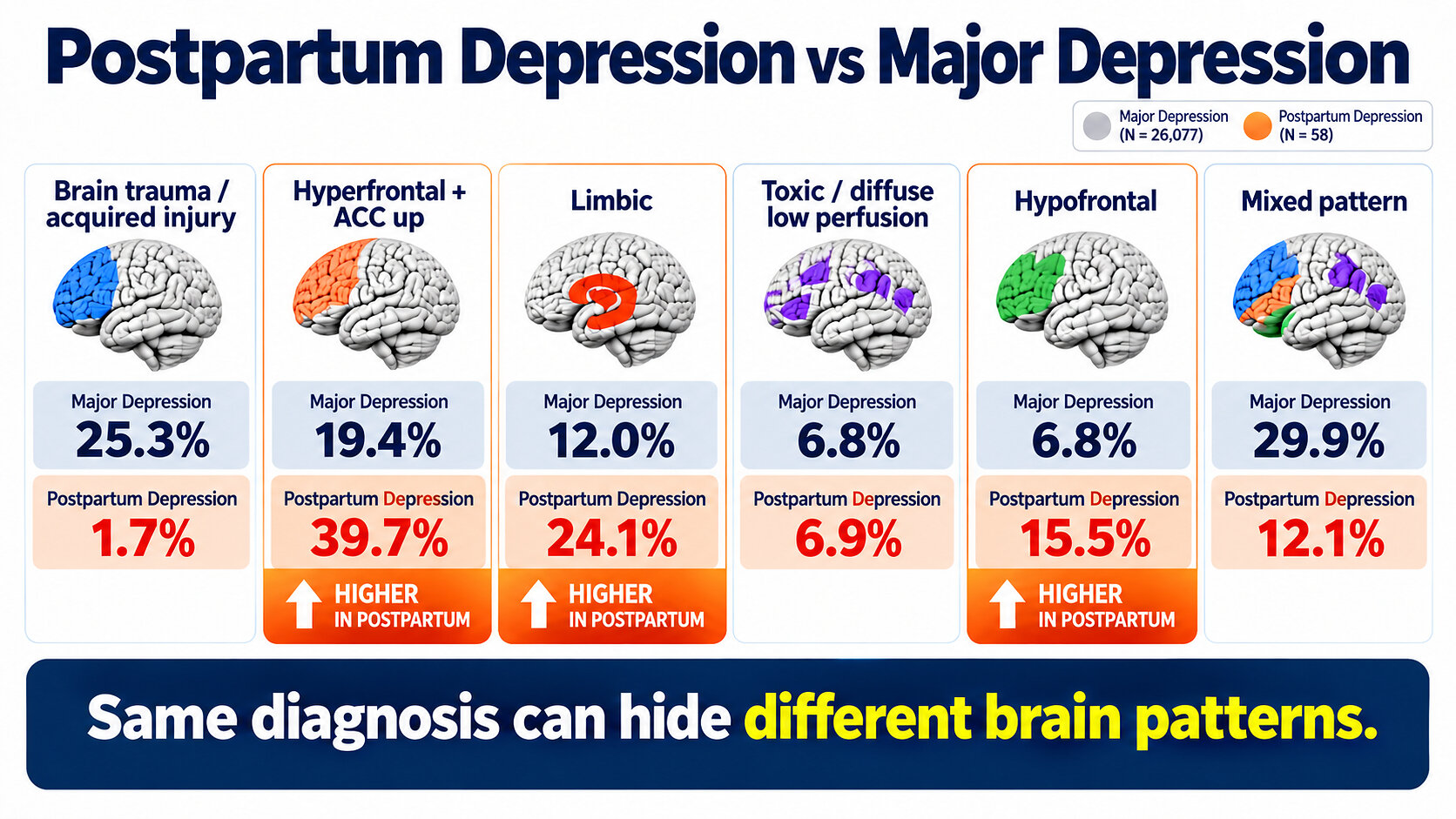
Amen Clinics has released new research utilizing brain SPECT imaging to differentiate functional brain patterns associated with postpartum depression (PPD) from those in more general depression. The study compared brain scans from 58 women diagnosed with PPD against scans from 26,077 individuals with major depression.
The findings revealed significant differences in brain activity patterns. Nearly 40% of women with PPD exhibited a hyperfrontal/anterior cingulate cortex (ACC) pattern, compared to 19.4% of those with major depression. Limbic and hypofrontal patterns were also more common in the PPD group. Notably, a brain trauma/acquired injury pattern, present in 25.3% of the major depression cohort, was found in only 1.7% of the PPD group.
The research suggests that the same psychiatric diagnosis can encompass different underlying brain function patterns. This may help explain why individuals with similar symptoms can respond differently to treatment, highlighting the benefit of a more personalized approach. Amen Clinics emphasizes that SPECT imaging is used as part of a comprehensive evaluation, not as a standalone diagnostic tool.
These findings contribute to a growing understanding of the biological underpinnings of postpartum mood disorders and may support more precise, individualized treatment strategies. The research follows increased public attention on postpartum mental health, amplified by cases such as the Lindsay Clancy incident.