Canadian Wildfires Impact U.S. Air Quality
Multiple large wildfires are currently burning across Canada, with their smoke drifting into the United States and significantly degrading air quality in numerous regions.
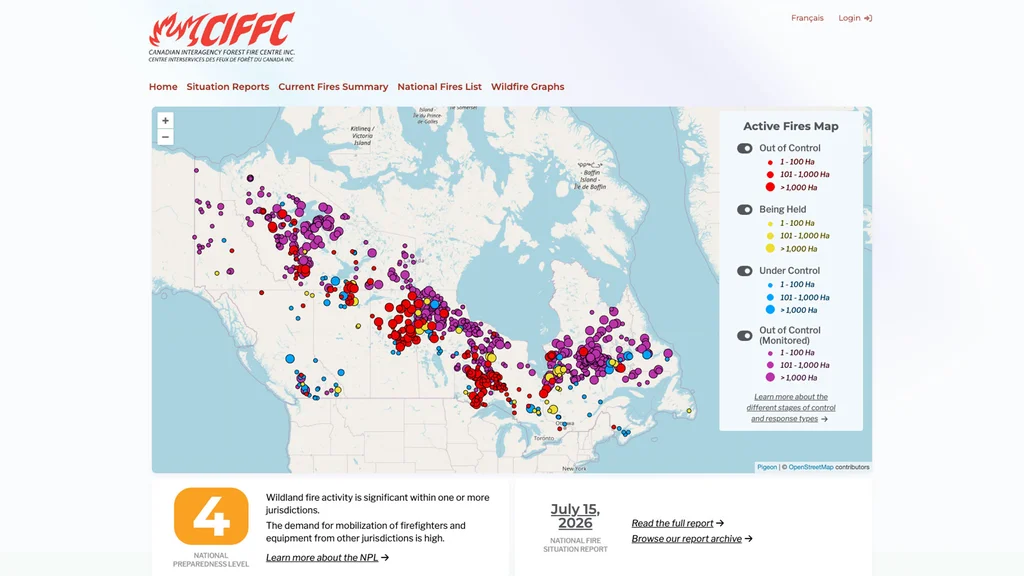
Multiple large wildfires are currently burning across Canada, with the resulting smoke drifting into the United States and causing significant air quality issues for millions of Americans.
While wildfires are a natural part of ecosystems, the scale and intensity of fires during this peak period of Canada's fire season – typically April to October, with May through August being the most active – are considerable. Canadian officials report 857 active fires nationwide, with approximately 725 categorized as out of control or difficult to manage.
Canada is at a National Preparedness Level of four, its second-highest designation, indicating significant fire activity and a high demand for inter-jurisdictional firefighter and equipment mobilization. The smoke has traveled into the U.S., particularly affecting the Midwest and Northeast, where millions are exposed to elevated levels of particulate matter.
Air quality alerts have been issued in several cities and states, including New York, Michigan, and Pennsylvania. The fine particles in wildfire smoke can cause respiratory problems and inflammation upon inhalation, potentially entering the bloodstream.
The Canadian Interagency Forest Fire Centre (CIFFC) provides a mapping service to track fire locations and status. The AirNow.gov map, maintained by the U.S. Environmental Protection Agency (EPA) and other agencies, displays real-time air quality across the United States. Areas in Minnesota and Wisconsin, among others, are experiencing air quality described as "hazardous" or "very unhealthy." A slight improvement is expected in some states for tomorrow, though conditions are likely to remain unhealthy in many locations.