Carbon-Based Pricing Encourages Greener Tourist Intentions, Hanyang University Study Finds
Research from Hanyang University indicates that hotels linking prices to resource consumption positively influences tourists' intentions to adopt eco-friendly behaviors during their stay.
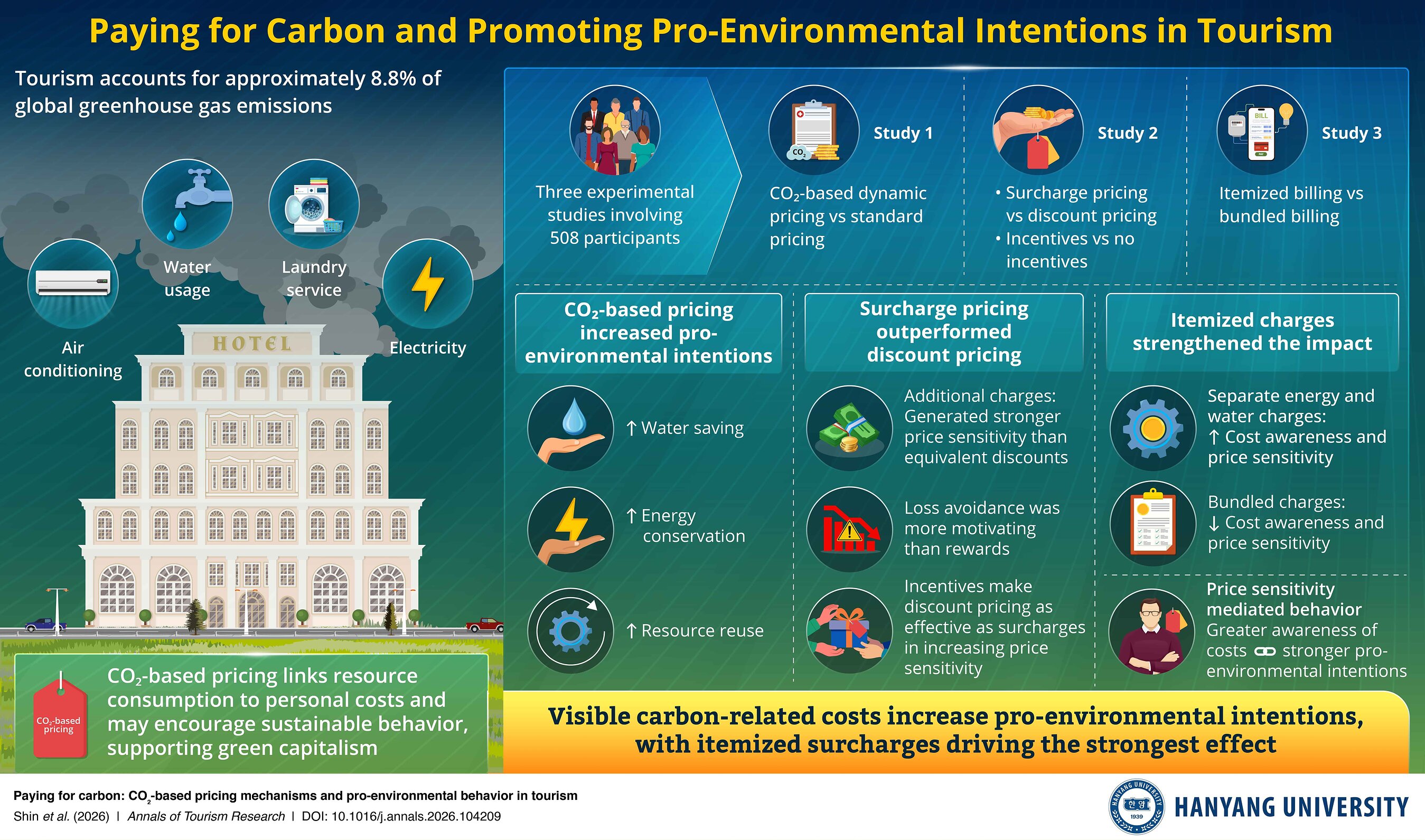
A study conducted by researchers at Hanyang University suggests that tourists are more likely to intend environmentally friendly actions when their accommodation prices are directly tied to resource consumption. The findings were published in the journal Annals of Tourism Research in July 2026.
The research revealed that carbon-based pricing, particularly when environmental costs for electricity, water, or heating are itemized as separate charges, increased participants' intentions to conserve resources. This effect was more pronounced when excessive consumption resulted in a surcharge compared to when lower consumption earned an equivalent discount.
Lead researcher Professor Hakseung Shin stated that addressing complex sustainability challenges in tourism requires more than moral appeals or regulations. He advocates for "green capitalism," aligning ecological goals with market incentives as a more effective strategy.
Three experiments were conducted using realistic hotel and short-term rental booking scenarios to evaluate how different pricing structures influenced participants' intentions to conserve resources. The results indicate that making environmental costs transparent can enhance their impact on consumer decision-making.
The researchers propose that such carbon-based pricing systems could be implemented by hotels, short-term rental platforms, and travel agencies. They anticipate that advancements in smart technology in the coming years may lead to personalized carbon footprint pricing becoming common in tourism, supporting the sector's transition to a lower-carbon future. The study, however, utilized hypothetical scenarios and measured intentions, necessitating further research to confirm real-world behavioral translation.