Cargill Explains Bioeconomy's Role in Food and Agriculture
Cargill details the bioeconomy, utilizing renewable, nature-based resources for food, materials, and energy. The company highlights its integration with circular economy principles for sustainable practices.
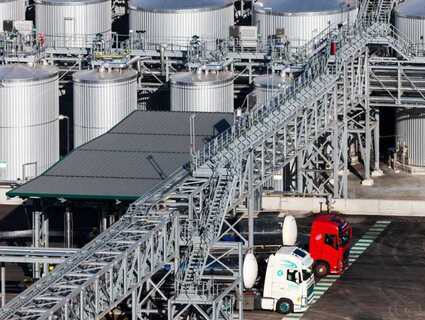
Global corporation Cargill has outlined the significance of the bioeconomy, a sector that uses renewable, nature-based resources like plants, microorganisms, and waste to produce food, materials, and energy. The company's explanation emphasizes the transition towards more sustainable production methods.
The bioeconomy aims to establish a more sustainable ecosystem capable of addressing major global challenges, including food security and climate change. Cargill notes that food systems play the largest role in the global bioeconomy, making it critical for feeding a projected world population of 9 billion by 2050 amidst ongoing agricultural disruptions.
Cargill specifically highlights the concept of a circular bioeconomy, which merges the use of biological resources with the principles of a circular economy. This approach focuses on turning waste streams into valuable products through reuse, repurposing, and recycling, thereby limiting waste, pollution, and biodiversity loss.
The company states its commitment to advancing the bioeconomy across three primary areas: bio-based food and animal feed, bio-based products, and bioenergy. Cargill cites examples of innovation, such as leveraging fermentation processes to develop specialized products like shrimp feed designed to reduce mortality and improve yields, and producing stevia-based sweeteners with a reduced environmental footprint.