Chalmers researchers shed light on "strange metal" state in superconductors
Researchers at Chalmers University of Technology have investigated the "strange metal" state in high-temperature superconductors. New experiments provide insights into its connection with charge density waves and enable its expansion.
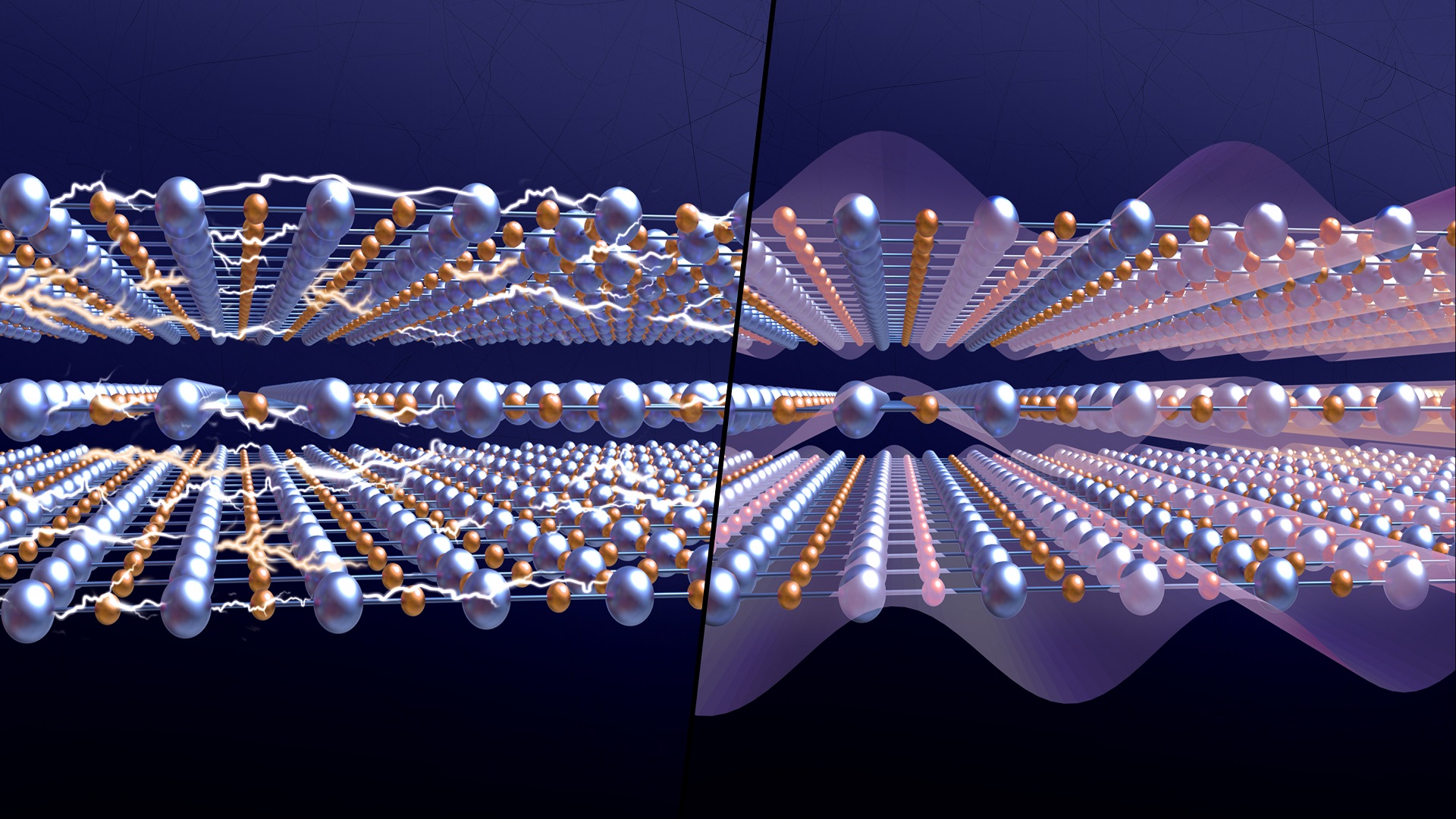
Researchers at Chalmers University of Technology have delved into the enigma of the "strange metal" state within high-temperature superconductors. These materials conduct electricity without energy loss, and the research aims to better understand their behavior, potentially advancing the development of lossless energy transmission.
The strange metal state emerges at temperatures above the superconducting transition. Its electrical resistance exhibits a linear dependence on temperature, a stark contrast to the more complex behavior observed in conventional metals. The state is believed to stem from quantum entanglement, where electrons interact in a manner devoid of classical counterparts.
The research addressed what terminates the strange metal state. Chalmers scientists observed that in high-temperature superconductors, these phases break down due to charge density waves (CDW), which are patterns of electric charge within the material's crystal lattice. By subjecting nanoscale samples of superconducting yttrium barium copper oxide to mechanical strain that suppressed CDWs, the strange metal state re-emerged.
This discovery expands the domain of the strange metal state and deepens the understanding of its nature. The highest superconducting transition temperatures have been observed when the strange metal phase is more pronounced. The study opens new avenues for manipulating quantum materials through strain and may contribute to developing superconductors that operate at even higher temperatures.