China Recovers Rocket Stage With Sea-Based Net, Challenging SpaceX
China successfully recovered a rocket stage using a sea-based net system, marking a new approach to reusable rocket recovery and directly competing with SpaceX's established methods.
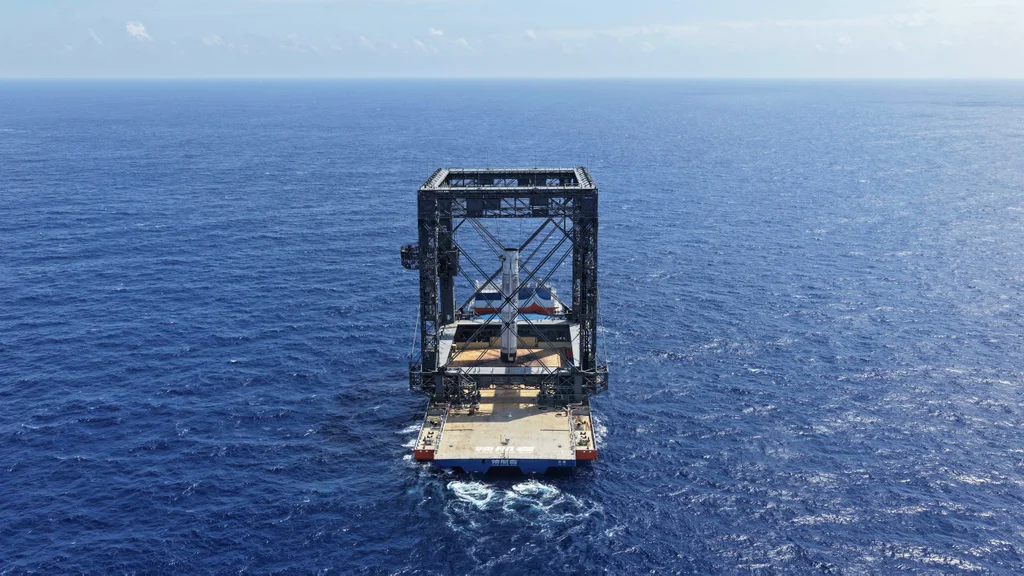
China has successfully developed a novel system for recovering rocket stages, demonstrated on July 10 during the maiden flight of its Long March-10B rocket. The China Aerospace Science and Technology Corp. (CASC), a state-owned entity, captured the descending booster stage with a moving net deployed from a ship at sea, making China the second nation to recover an orbital-class booster and the first to use a sea-based net.
This method differs significantly from SpaceX's 'chopsticks' system, where large robotic arms catch returning rocket boosters near the launch tower. China's approach utilizes a large metallic structure with four steel cables mounted on a dynamically positioned vessel. The rocket stage descends into the net-like structure, and an automated system moves the cables to hook onto the booster, absorbing its momentum and suspending it above the ship.
The sea-based recovery system offers unique advantages, including flexibility in choosing recovery zones and potentially faster turnaround times for future launches. The development of reusable rockets is crucial for controlling the commercial launch market, and China's progress presents a direct challenge to SpaceX's current market position.
SpaceX employs its 'Mechazilla' system of mechanical arms to capture Super Heavy boosters near its launch site. Both companies have eliminated traditional landing legs to save weight and simplify design, aiming for more efficient and cost-effective space operations.