Chip Stocks Decline Amid AI Uncertainty and Growing Competition
Major US and Asian semiconductor companies, including Micron, Sandisk, and Intel, have experienced significant stock price drops. The decline is attributed to uncertainty surrounding AI investments and increasing competition from China.
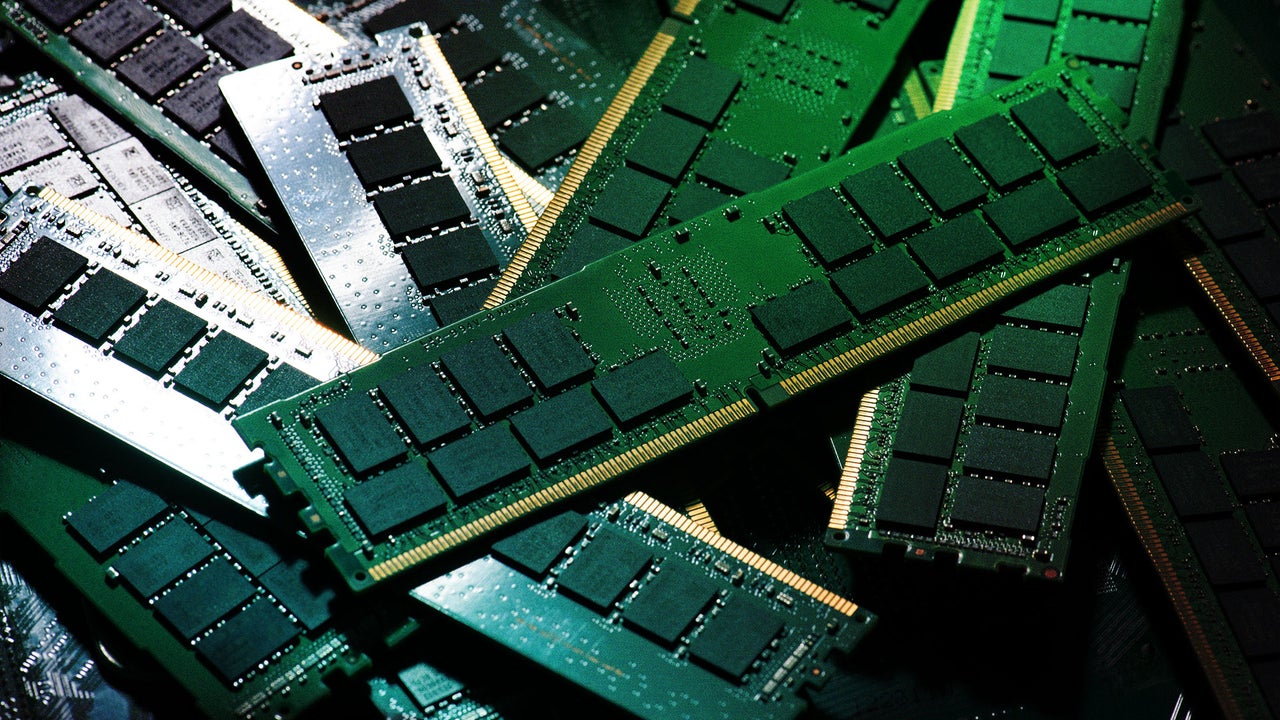
Shares in major US and Asian semiconductor firms, including Micron, Sandisk, and Intel, saw significant declines in premarket trading. This downturn mirrors reactions in Asian markets, where memory giant SK Hynix and Samsung Electronics faced sharp stock price drops. The slump in Asia has fueled investor concerns in Western markets, with Nasdaq futures indicating a negative start to trading.
The primary driver for this decline is attributed to mounting uncertainty surrounding artificial intelligence (AI) investments. For years, the AI boom has propelled valuations for both AI model developers and the hardware manufacturers supplying the necessary components for massive data centers. Companies like Nvidia, a key GPU provider, have seen substantial growth. More recently, demand for memory chips and storage solutions has also surged, leading to significant stock price increases for firms such as Micron, SanDisk, and Intel.
However, investors are now expressing concerns about the potential returns on AI-focused capital expenditures. A conclusion by major tech companies that their AI investments may not yield expected profits in the short or long term could lead to scaled-back spending. Such a shift could have severe consequences for the profitability and stock valuations of chipmakers.
Adding to market volatility are reports of Nvidia considering financial guarantees for OpenAI's data center build-out, which some investors view as a concerning pattern of circular financing. Furthermore, news that a Chinese company has begun manufacturing its own immersion deep ultraviolet (DUV) lithography machines has disrupted the market. DUV technology is essential for chip manufacturing, and China's increasing self-sufficiency could give domestic players, like ChangXin Memory Technologies, a significant competitive advantage. This may potentially erode market share and profitability for established international competitors such as SK Hynix, Samsung, Micron, and Kioxia.
In essence, a confluence of factors, including AI investment uncertainty, potential financial circularity, and increased competition from China's domestic manufacturing capabilities, has led to the sell-off in semiconductor stocks. Investors appear to be cashing in on recent substantial gains amid these prevailing market concerns.