Climate Change Drove Decline in Ice Age Hunter-Gatherer Populations
A large-scale study of fossil human teeth indicates climate change significantly impacted Ice Age European hunter-gatherer demographics, leading to sharp population declines and regional extinctions.
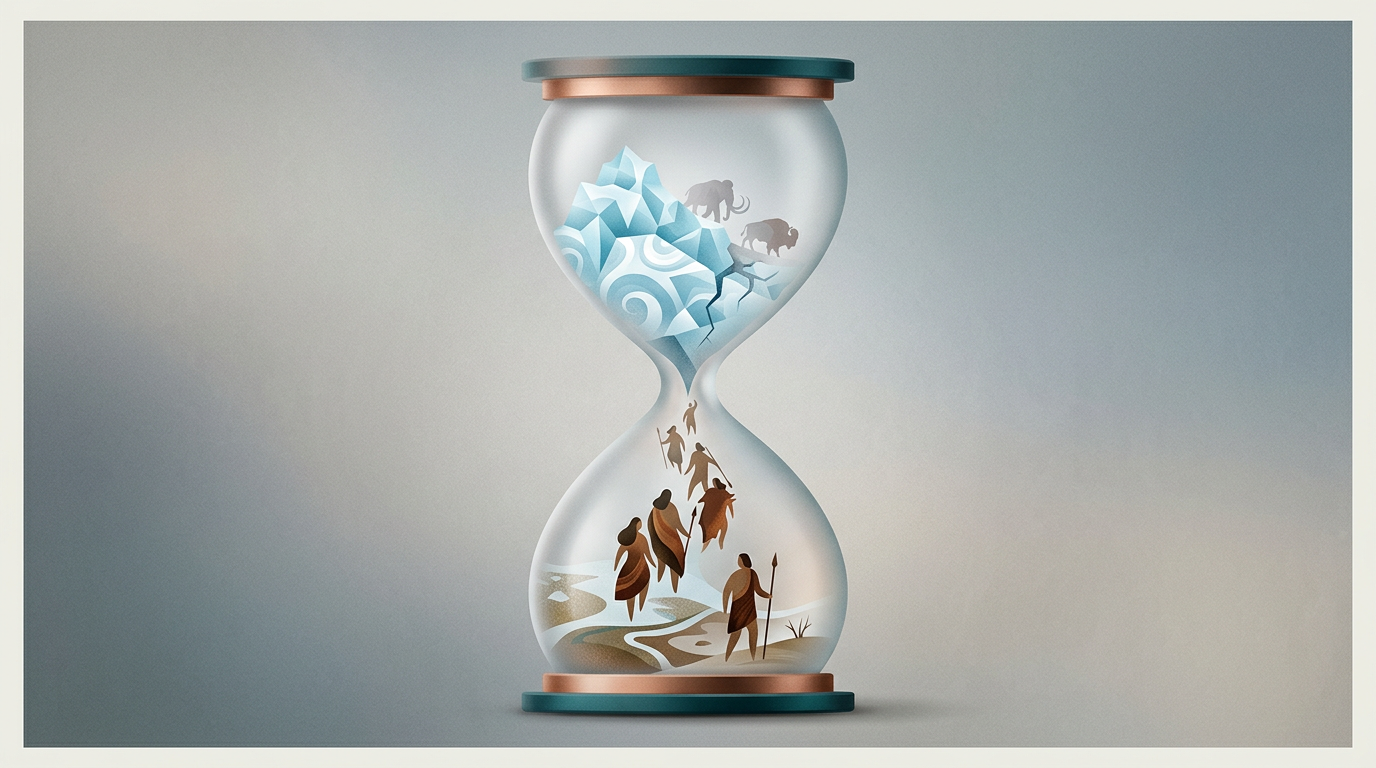
An international research team has found that climate change drastically affected the populations of hunter-gatherers in Ice Age Europe between 47,000 and 7,000 years ago. The study, utilizing the largest dataset of human fossils from the period, reveals sharp declines in population sizes during the coldest periods, with some evidence suggesting extinction events in Western Europe.
The research, led by Dr. Hannes Rathmann from the Senckenberg Centre for Human Evolution and Palaeoenvironment, employed a novel machine learning method to analyze morphological traits in fossilized human teeth. This approach allowed researchers to overcome limitations of scarce and poorly preserved ancient DNA, enabling the examination of 450 prehistoric individuals. Teeth, being the most durable human tissue, provided a substantial collection of data.
Analysis indicated that from approximately 47,000 to 28,000 years ago, populations in Western and Eastern Europe were genetically connected, correlating with archaeological findings of widespread cultural similarities. This era was characterized by open steppe landscapes supporting large mammal herds.
However, during the subsequent Late Pleniglacial period (28,000 to 14,700 years ago), genetic connections between these regions ceased, and population sizes significantly reduced, leading to a loss of genetic diversity. Researchers attribute this demographic shift to severe climate deterioration, including falling temperatures and the expansion of tundra landscapes, which impacted prey availability for hunter-gatherers.
Remarkably, the study suggests that populations in Western Europe went extinct during the transition from the Middle to the Late Pleniglacial and were later replaced by migrants from Eastern Europe. As temperatures rose and glaciers retreated post-Ice Age, populations in both regions began to recover and interregional migration resumed.