Clinical trial confirms efficacy of angiographic vFFR in coronary revascularization
The LIPSIA-STRATEGY study indicates that Pie Medical Imaging's CAAS vFFR system provides clinical outcomes comparable to traditional pressure wire-based FFR.
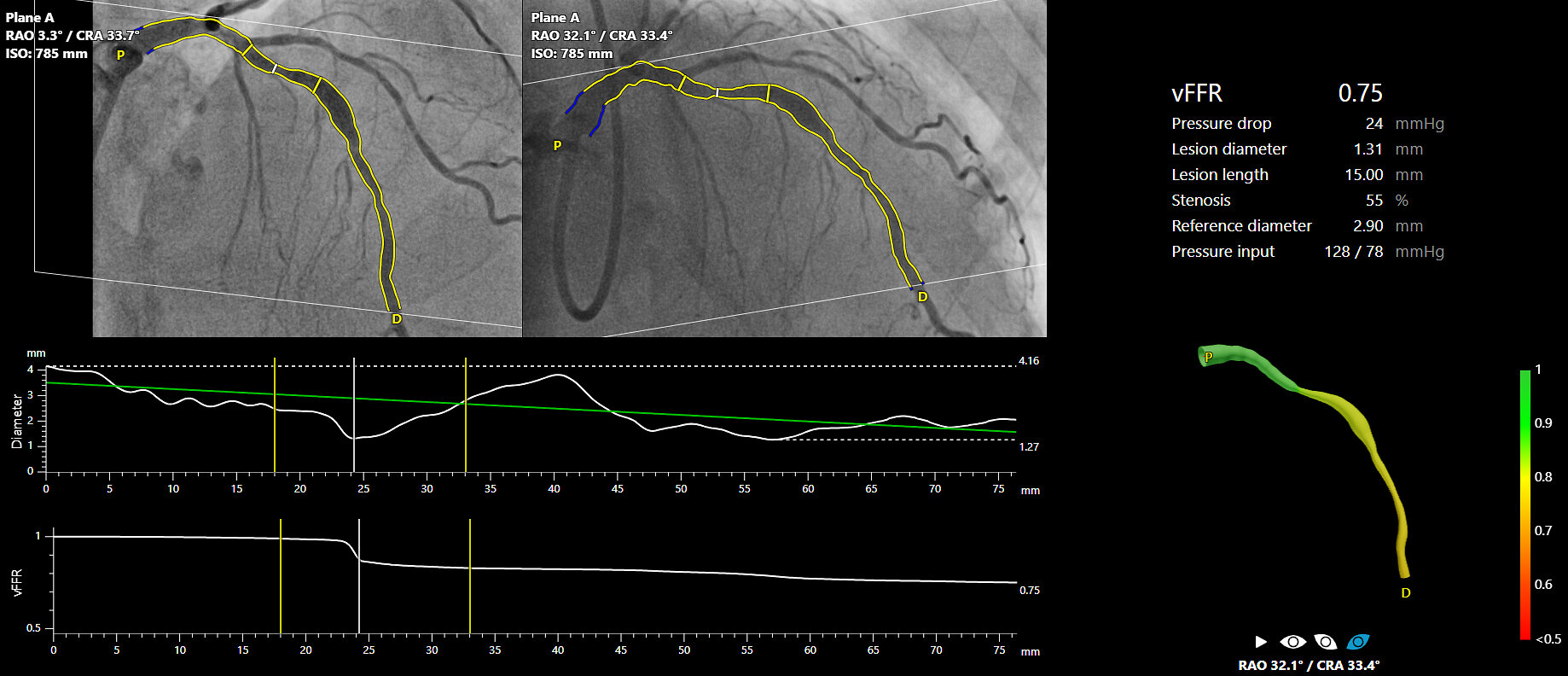
The LIPSIA-STRATEGY clinical trial has demonstrated that the CAAS vFFR system, developed by Pie Medical Imaging, is non-inferior to traditional fractional flow reserve (FFR) measurements using pressure wires. The findings were presented during the late-breaking clinical trial session at the Transcatheter Cardiovascular Therapeutics (TCT) 2026 congress and simultaneously published in the Journal of the American College of Cardiology.
The multicenter, randomized study involved 1,053 patients with intermediate coronary stenosis. Researchers compared outcomes between groups treated using vFFR-guided strategies and those using conventional pressure wire FFR. The primary endpoint was the incidence of major adverse cardiovascular events (MACE) at one-year follow-up.
Lead investigator Professor Holger Thiele of the Heart Center Leipzig noted that the angiographic-based approach offers a simpler workflow, reduced radiation exposure, and comparable clinical results to invasive wire-based methods. Pie Medical Imaging CEO Bas Kuppens stated that the data reinforces previous findings from the FAST III study, validating the adoption of physiological-based decision-making in percutaneous coronary interventions.