Cocoa Price Volatility Disrupts Ingredient Procurement and Product Formulation
Cocoa price volatility and supply chain challenges are forcing food manufacturers to seek alternatives and optimize products. The risk to cocoa supply is now structural.
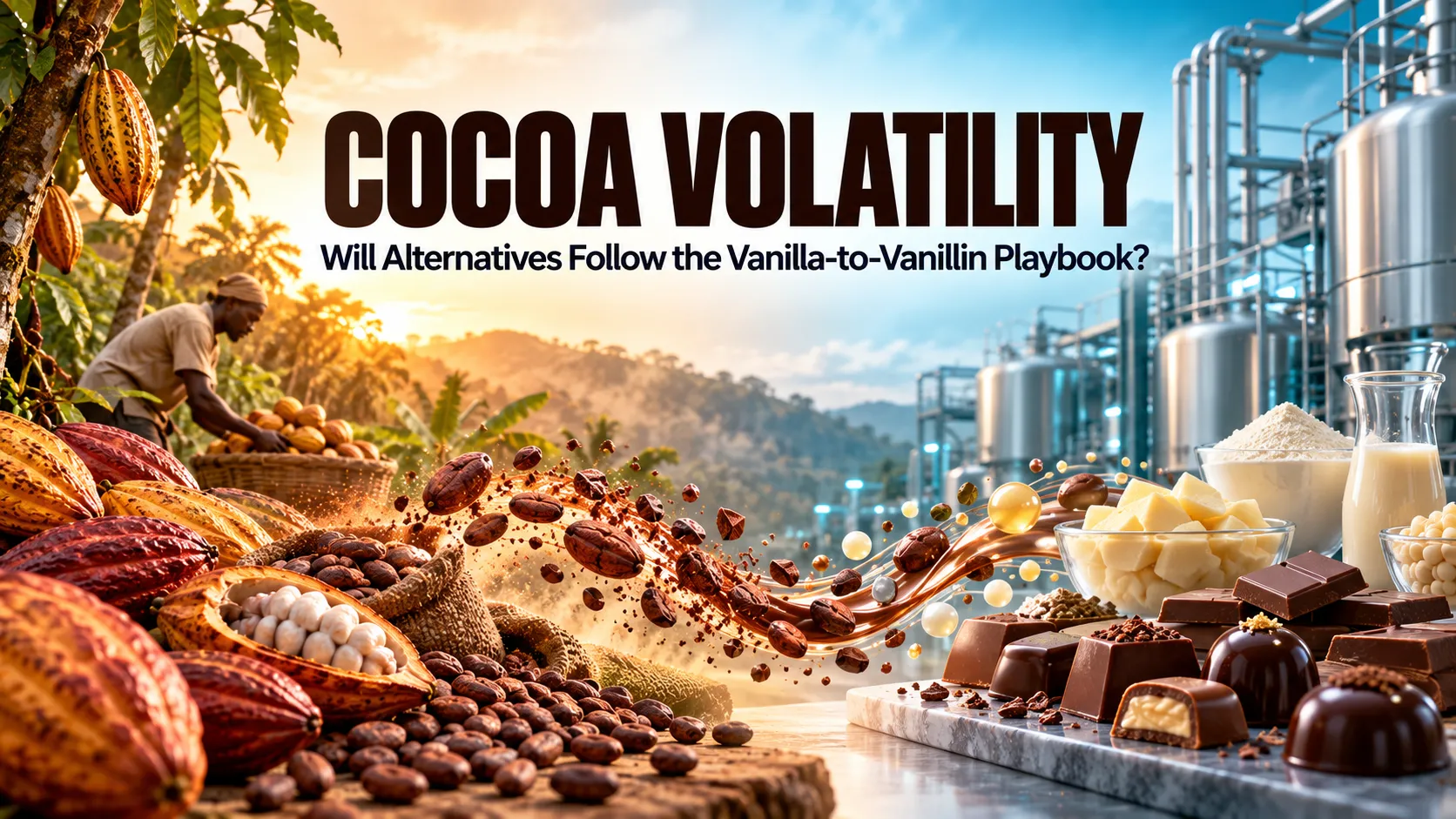
The significant volatility in cocoa prices and ongoing supply chain disruptions are reshaping ingredient procurement and product formulation within the food and confectionery industries. According to an analysis by DataM Intelligence, climate risks, aging plantations, the concentration of production in West Africa, and EU deforestation regulations are driving strategic shifts.
High and fluctuating cocoa prices have compelled manufacturers to explore more cost-effective solutions. Despite a retreat from record highs, cocoa's price profile and volatility remain a challenge for product pricing and architecture. The core question is how much demand can be retained with authentic cocoa versus how much will permanently migrate to substitutes, such as cocoa extenders, cocoa butter alternatives, and cocoa-free ingredients.
Structural issues, including the impacts of climate change, aging farms, and disease pressure in West Africa, are significantly limiting supply recovery. Furthermore, new EU deforestation regulations are increasing traceability requirements in the supply chain, potentially creating a distinct, higher-cost procurement pool for compliant cocoa.
The analysis draws parallels to the vanilla and vanillin market, where past price shocks and supply difficulties led to a permanent shift towards synthetic and fermented vanillin alternatives. While premium chocolate is likely to maintain its preference for authentic cocoa, mainstream confectionery and coating manufacturers are increasingly prioritizing cost-efficiency and supply resilience through alternative ingredients. This trend is projected to continue through 2027.