Creality 3D Explains 3D Print Farms and Their Benefits
Shenzhen Creality 3D Technology Co., Ltd. has published a guide on the concept and use of 3D print farms. These farms enable high-volume production using multiple simultaneous printers.
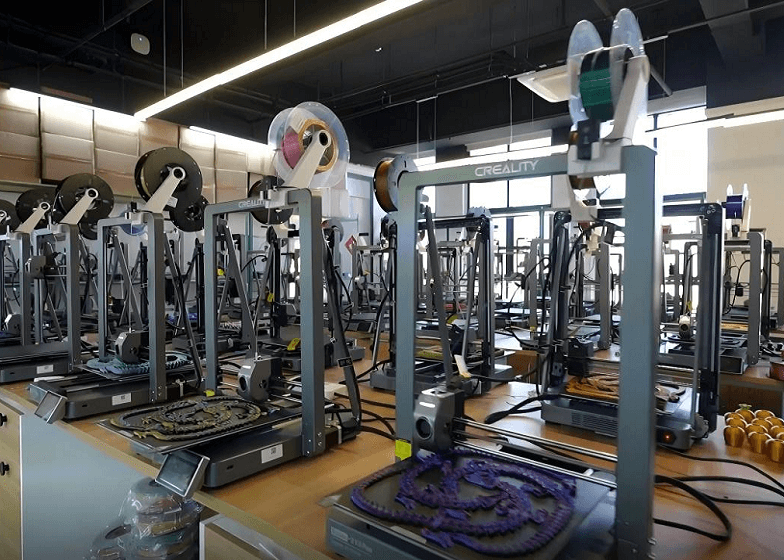
Shenzhen-based 3D printing company Creality has released a detailed explanation of the concept known as a 3D print farm. A 3D print farm involves multiple 3D printers operating together in a centralized setup. The aim of this solution is to significantly increase production efficiency and scalability in a faster and more cost-effective manner than traditional manufacturing or single 3D printers.
According to Creality, 3D print farms offer substantial advantages, including parallelized printing, which allows for the simultaneous creation of multiple parts, thereby reducing turnaround times. The system also supports remote control, enabling users to monitor and manage printing processes from anywhere with an internet connection. Leveraging automation minimizes manual labor and facilitates 24/7 operation.
The process of operating a print farm begins with model preparation, ensuring printability. Subsequently, models are "sliced," meaning they are converted into a format understood by the printers using specialized software. Print commands are then distributed across all printers in the farm. Processes are continuously monitored for potential issues, and finally, the completed parts undergo post-processing.
Creality emphasizes the importance of selecting the right printers for a farm's efficiency. The company mentions popular models such as the K2 Plus Combo, K1 Max, and Ender series, which are suitable for mass production based on FDM technology. 3D print farms can consist of five to hundreds of printers, offering flexibility to meet business needs.