Creality 3D Technology Guide Addresses Bridge Printing Optimization
Shenzhen Creality 3D Technology Co., Ltd. has released a guide detailing how to improve bridge printing in 3D fabrication. The guidance aims to help users achieve cleaner and more efficient prints by optimizing this technique.
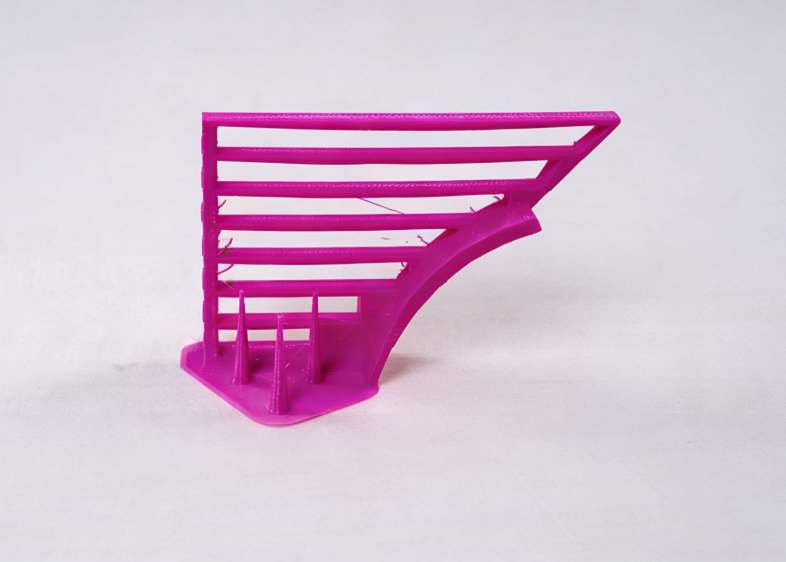
Shenzhen Creality 3D Technology Co., Ltd., a manufacturer of 3D printers, has published a guide focusing on bridge printing, a technique used to span open spaces in 3D fabrication without the need for support structures. This method is crucial for saving print time and materials while enhancing part quality.
The guide explains that successful bridging relies on the deposited filament solidifying quickly enough to maintain a flat path between two points. Failures, such as drooping or broken bridges, often stem from the molten plastic's inability to hold its shape before cooling.
According to Creality's analysis, common causes for failed bridges include excessively high nozzle temperatures leading to prolonged filament fluidity, insufficient part cooling, overly fast print speeds that prevent filament adhesion, inaccurate material extrusion (over- or under-extrusion), and the inherent properties of the printing material. For instance, PLA is noted for bridging well due to its rigidity, while PETG may present more challenges.
To address these issues, the guide recommends several adjustments. These include reducing the printing temperature by 5-10°C, setting the part cooling fan to 100% during bridging, slowing down the bridge print speed to between 20-40 mm/s, adjusting the flow rate to approximately 90-95%, and fine-tuning retraction and coasting settings to minimize stringing. Keeping the nozzle clean is also highlighted as important.
Creality also suggests utilizing bridge calibration test models. Printing these models allows users to assess their printer's bridging capabilities across various distances and identify settings that require optimization. Achieving flat, clean bridges indicates a well-tuned 3D printer capable of producing high-quality components.