Creality Explains 3D Printing of Rubber-Like Materials
Shenzhen Creality 3D Technology Co., Ltd. has released a guide detailing the 3D printing of rubber-like materials, focusing on TPU filament. The article clarifies the differences between traditional rubber and flexible filaments for printing applications.
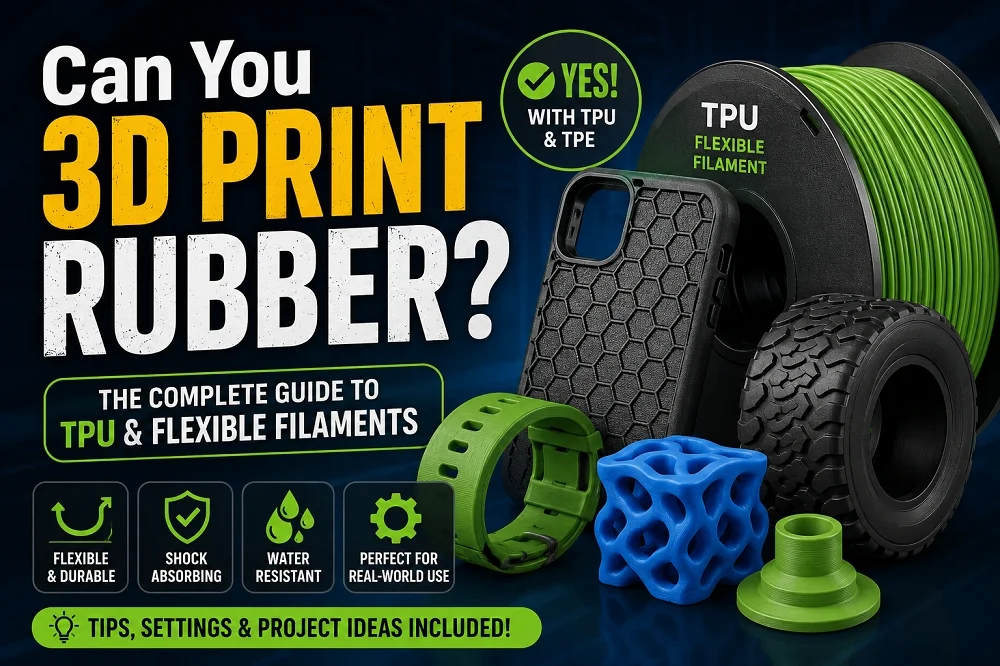
Shenzhen Creality 3D Technology Co., Ltd., a 3D printer manufacturer, has published a guide focused on 3D printing rubber-like materials. The article clarifies why traditional rubber cannot be directly printed on FDM printers and introduces the use of flexible thermoplastic materials, such as TPU (thermoplastic polyurethane), as an alternative.
Traditional rubber materials are not suitable for FDM printers, which operate by melting and solidifying thermoplastics. Rubber burns rather than melts when heated, making it virtually impossible to extrude through a standard 3D printer nozzle. While industrial rubber printing systems exist, they require specialized equipment and are not feasible for most hobbyists. Flexible thermoplastics like TPU and TPE are more accessible alternatives that offer rubber-like characteristics.
TPU, known for its elasticity and durability, is suitable for a range of applications including sporting goods and automotive parts. It provides good shock absorption and grip, and is considered more user-friendly and recyclable than traditional rubber. Users can create items such as phone cases, protective bumpers, and custom grips for sports.
Creality notes that most 3D printers can handle TPU printing, but direct-drive extruders and precise extrusion control improve results. Slowing down print speed, adjusting retraction settings, and using optimal print temperatures (typically 210-240°C) are crucial to avoid issues like stringing and filament jamming. Ensuring adequate bed adhesion is also important to prevent prints from warping as they cool.