Creality Explains Common 3D Printing Technologies
Shenzhen Creality 3D Technology Co., Ltd. has released a guide comparing six prevalent 3D printing methods, including FDM, SLA, and DLP, to assist users in selecting the appropriate technology.
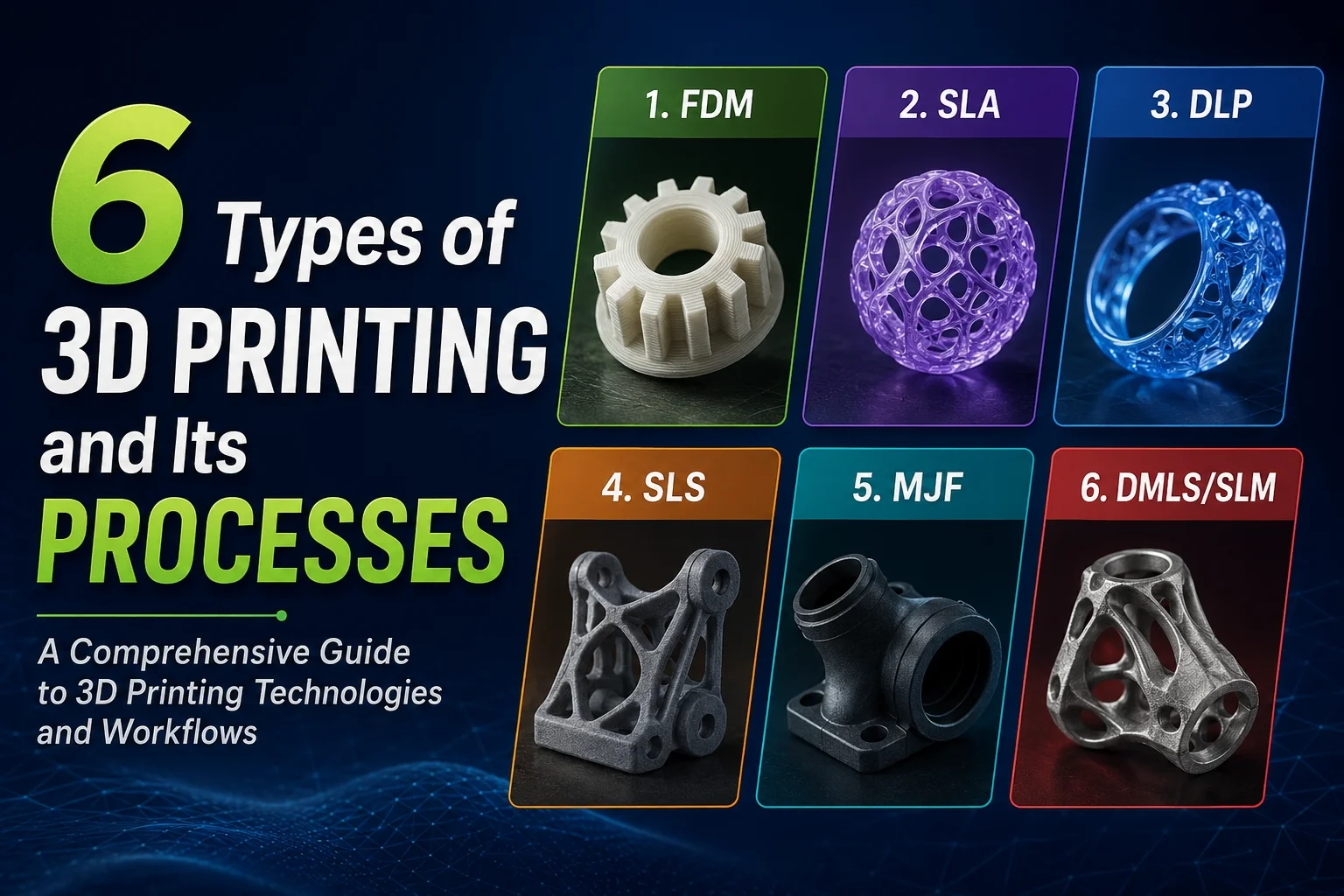
Shenzhen Creality 3D Technology Co., Ltd. has published a guide detailing various 3D printing technologies and their applications. The publication outlines six primary manufacturing methods: FDM (Fused Deposition Modeling), SLA (Stereolithography), DLP (Digital Light Processing), SLS (Selective Laser Sintering), MJF (Multi Jet Fusion), and DMLS (Direct Metal Laser Sintering).
According to the guide, 3D printing, or additive manufacturing, involves creating three-dimensional objects from digital CAD models by layering materials. This process is suitable for rapid prototyping and fabricating complex geometries with less waste compared to traditional subtractive methods.
FDM printing works by melting and extruding thermoplastic filaments layer by layer. It is presented as ideal for rapid prototyping, functional jigs/fixtures, and educational models, noting its user-friendliness and affordability.
SLA printing utilizes a UV laser to cure liquid photopolymer resin. This technology is described as suited for producing highly detailed miniatures, dental models, and jewelry patterns, emphasizing its precision but also its higher material costs and potentially messy post-processing. DLP printing, meanwhile, uses a digital light projector to cure entire layers of resin simultaneously, making it efficient for producing small precision components.
While not all six technologies are elaborated on in depth, the guide aims to help users identify the best 3D printer and software for their specific project requirements.