Creality Offers Guide to 3D Printed Lost Wax Casting
Shenzhen Creality 3D Technology Co., Ltd. has released a guide detailing the integration of 3D printing with lost wax casting. This technique allows for precise and repeatable manufacturing of metal objects.
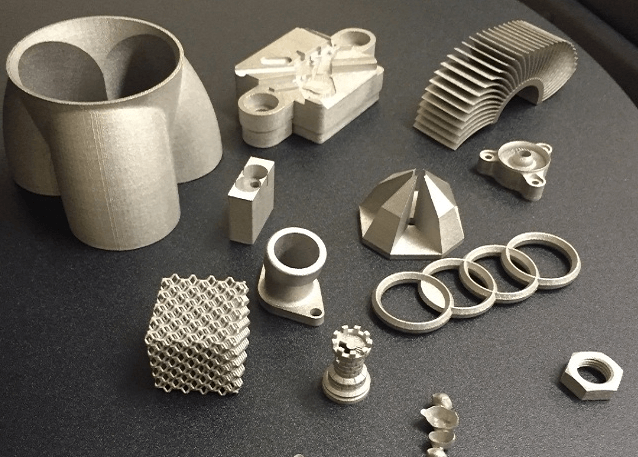
Shenzhen Creality 3D Technology Co., Ltd. has published a comprehensive guide for manufacturers and jewelers on employing 3D printing in the lost wax casting process. This modern approach merges traditional lost wax casting with the precision of 3D printing, enabling the creation of intricate metal objects.
Traditionally, a wax model had to be handcrafted for each individual item. 3D printing allows for the accurate and repeatable production of wax models or castable resin patterns, significantly streamlining the manufacturing workflow. This method is particularly suited for smaller metal items, such as jewelry and prototypes, which cannot be directly 3D printed in metal.
The process begins with designing a 3D model using CAD software, followed by printing the model using wax filament or castable resin. The printed model is then refined by removing support structures and incorporating a sprue for metal flow. Subsequently, the model is encased in a mold material, such as plaster, and after drying, the wax or resin is burned out, leaving a cavity for molten metal.
Creality highlights the precision and repeatability offered by this technique. By utilizing compatible 3D printers and quality wax filament or castable resin, designers can achieve intricate details. The final metal parts will require post-processing, such as polishing.
This method opens new avenues, especially in the jewelry sector and for producing small components where high accuracy and custom designs are paramount. Creality provides a range of 3D printers suitable for this and other manufacturing applications.