CrePal Releases Guide for "Plastic Skin" Quality Review in Adult AI Images
CrePal has published a guide to help digital studios identify and address "plastic skin" defects in AI-generated adult character images.
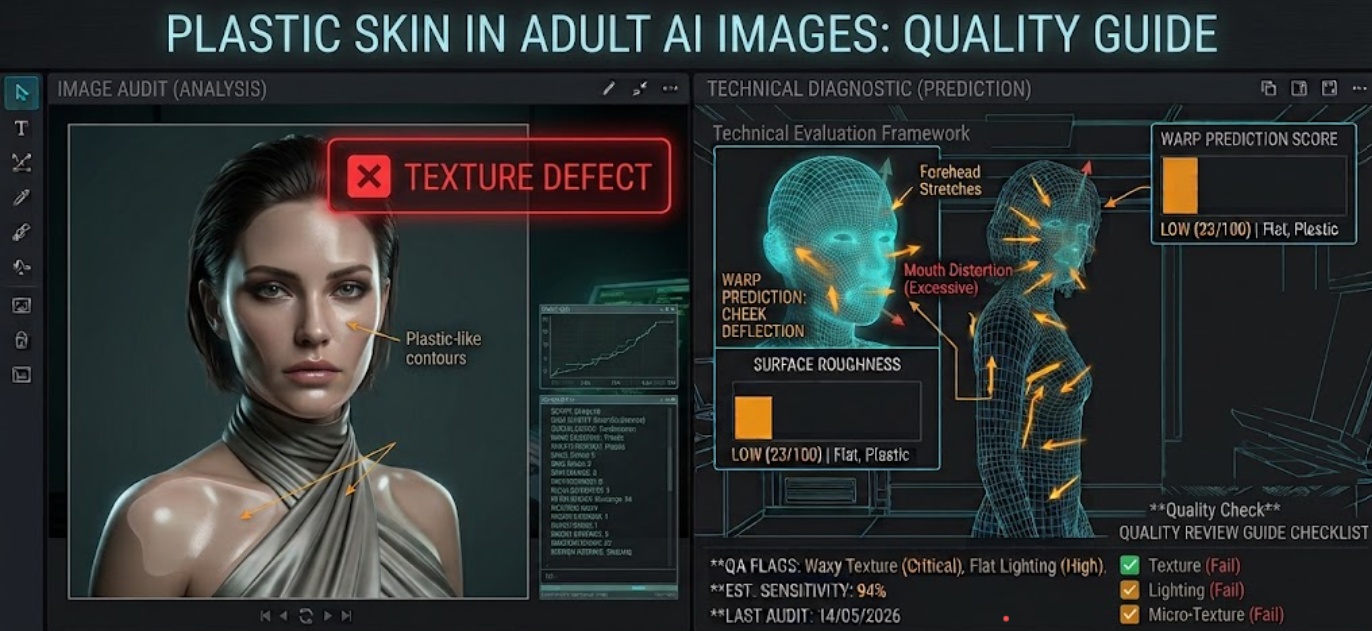
CrePal has released a new operational guide aimed at digital studios for quality assurance of AI-generated adult character portraits. The guide specifically addresses the common issue of "plastic skin" defects in synthetic image production.
The guide explains that "plastic skin" manifests as a lack of micro-texture, waxy highlights, and unnatural light scattering. These poorly rendered surfaces resemble smooth polymer rather than human skin. It also details the appearance of "halos" and excessive smoothing, which, combined with artificially sharpened details, create an artificial look.
Quality assurance teams are advised to inspect specific areas prone to these defects, such as the bridge of the nose, jawline, and knuckles, where AI models struggle with depth simulation. Hands are also identified as particularly susceptible, often appearing as smooth, featureless masses. These texture flaws can be exacerbated during image upscaling or compression.
CrePal emphasizes evaluating skin texture within the scene's context, considering lighting direction, color temperature, and depth of field. The guide concludes by highlighting the importance of maintaining visual consistency across multiple images of the same fictional character.