Critical Minerals M&A and Supply Chains Reshaping by 2026
DataM Intelligence reports a global race for lithium, rare earths, and copper acquisition and processing, reshaping industrial strategies by 2026. Mergers, trade deals, and strategic investments are key drivers.
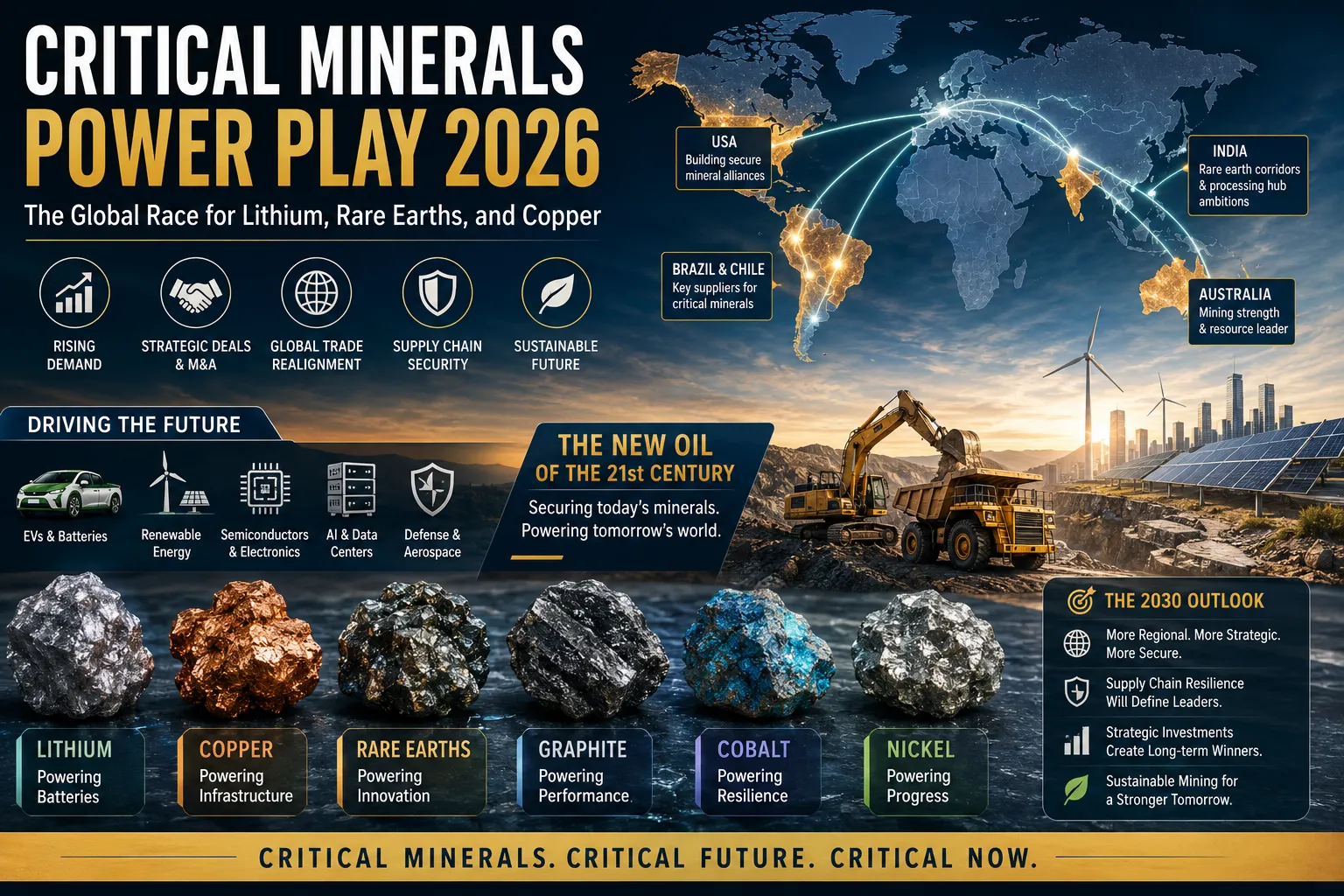
The global critical minerals market has shifted from a niche mining topic to a central element of industrial strategy. DataM Intelligence highlights that minerals like lithium, rare earth elements, copper, graphite, and cobalt form the backbone of electric vehicles, battery storage, wind turbines, and defense systems.
By 2026, the competition for these minerals is expected to intensify between governments, mining companies, and industrial buyers. The report emphasizes the growing importance of mergers and acquisitions (M&A), new trade partnerships, and government-backed funds. Reducing reliance on China's dominant supply chains is a primary objective.
The research firm points out that the competition extends beyond mining rights to encompass refining, magnet production, and recycling. Control over the midstream and downstream segments of the value chain will define the direction of the future energy transition.
In the first quarter of 2026, global mining M&A reached approximately $21.6 billion. To mitigate supply shortages and ensure security, companies and investors are making early moves. Notable examples include Orion Critical Mineral Consortium's interest in Eramet and Critical Metals Corp's planned acquisition of European Lithium.