DALY BMS Clarifies Active Versus Passive Battery Balancing
Electronics manufacturer DALY BMS has released an article detailing the differences between active and passive balancing in battery management systems (BMS) for lithium-ion batteries. Balancing is essential for battery pack longevity and performance.
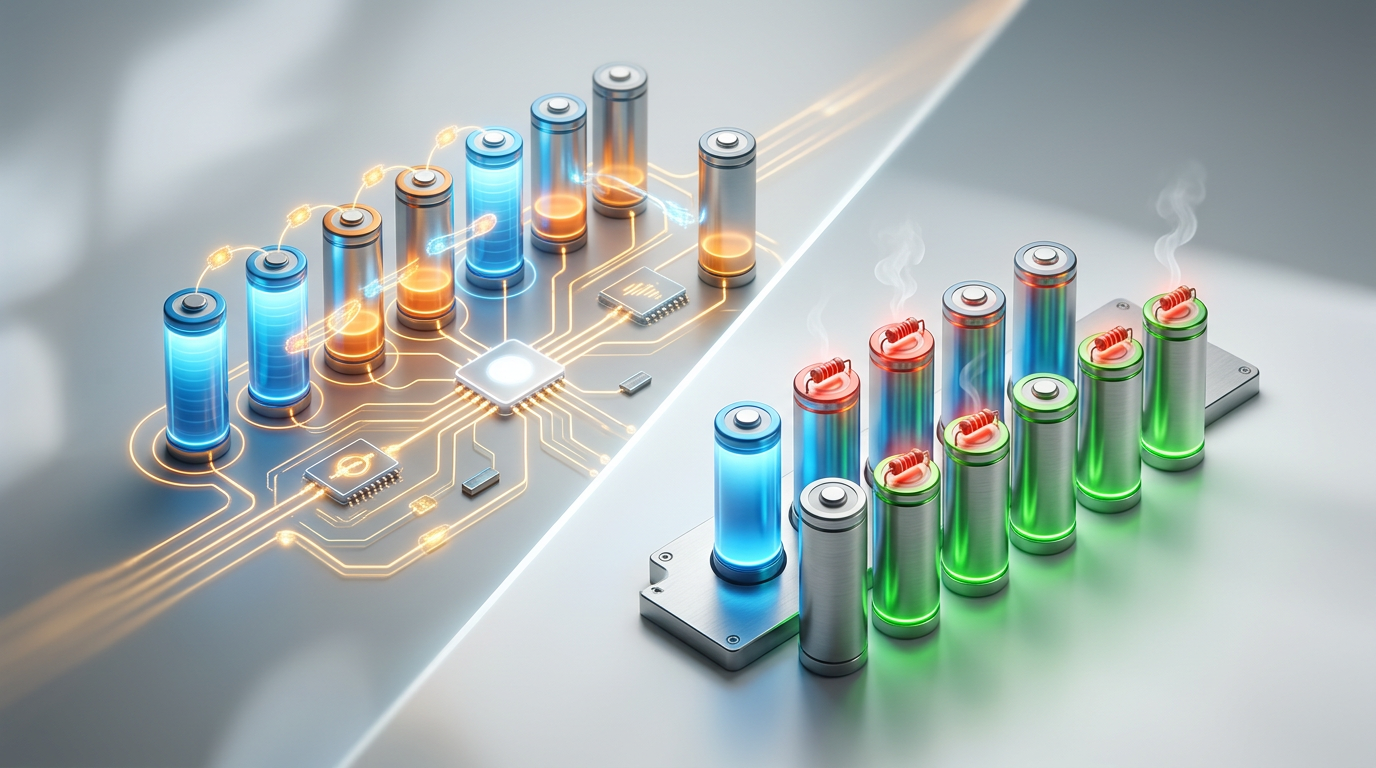
Electronics manufacturer DALY BMS has issued a press release clarifying the distinctions between active and passive balancing within battery management systems (BMS) for lithium-ion batteries. The release emphasizes that a BMS lacking a balancing function operates primarily as a data collector, not a complete management system.
The article defines active balancing as an algorithm-driven energy transfer between cells, while passive balancing dissipates excess energy as heat through resistors. Both methods aim to mitigate voltage inconsistencies among cells that arise from manufacturing variations or differing operating conditions.
DALY BMS explains that without balancing, weaker cells degrade faster and limit the overall usable capacity of the battery pack. During charging and discharging cycles, increasing voltage differences can lead to individual cells becoming over- or undercharged, impacting performance and reducing battery lifespan.
According to the manufacturer, passive balancing offers a simpler and more cost-effective solution but is less efficient, wasting energy as heat and requiring longer charge times. Active balancing, while more complex and expensive, is significantly more efficient, transferring energy between cells more rapidly and improving the battery pack's overall efficiency. The choice between methods depends on cell consistency and application requirements.