DALY BMS Clarifies Active vs. Passive Balancing in Energy Storage
DALY BMS has released a technical article distinguishing between active and passive cell balancing techniques for energy storage systems (ESS). The piece guides users on when active balancing's higher performance is necessary and when simpler passive methods suffice, highlighting duty cycle and expected lifespan as key factors influencing cell imbalance.
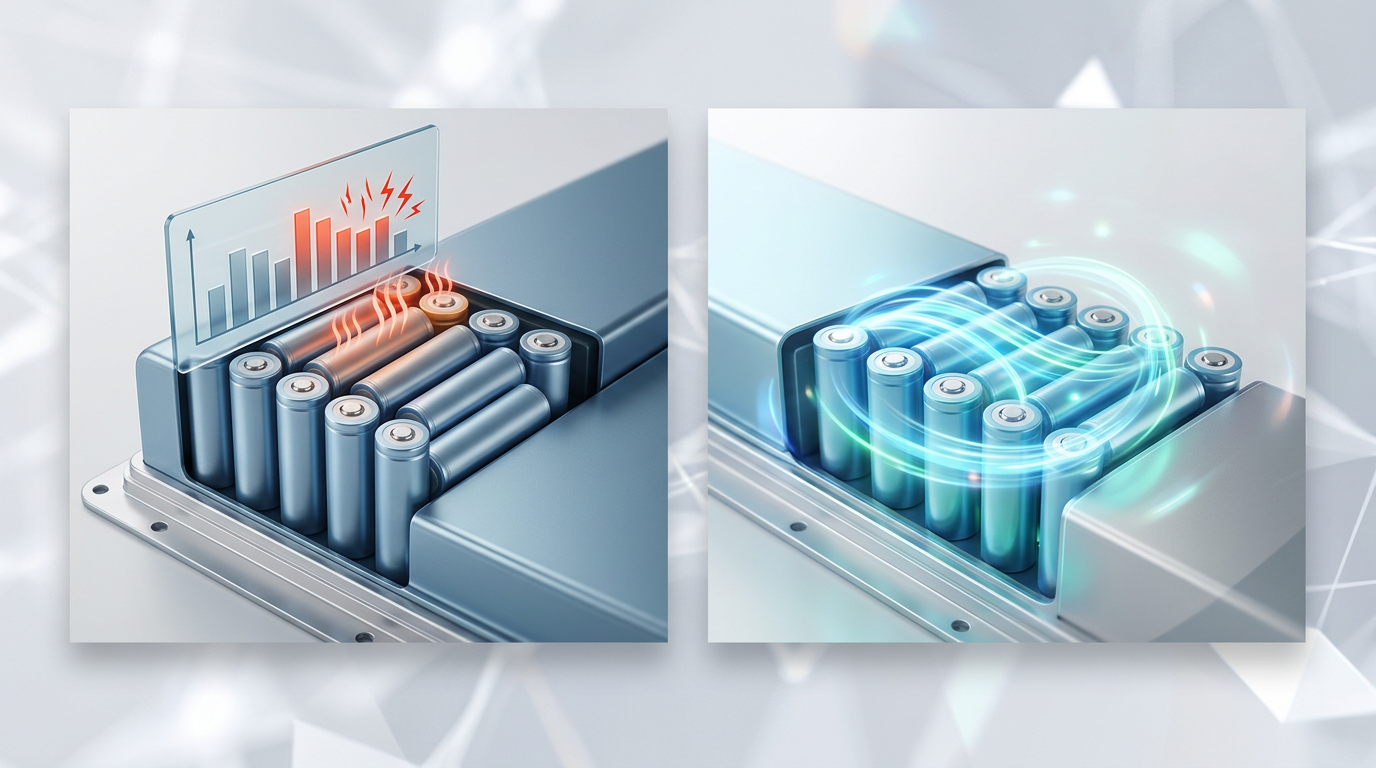
DALY BMS, a company specializing in battery management systems (BMS), has published an informational article aimed at clarifying the differences between active and passive cell balancing for energy storage systems (ESS). The article details scenarios where the more robust active balancing method is essential versus situations where simpler passive balancing is adequate.
Passive balancing, which generally dissipates excess energy from fully charged cells as heat, is suitable for lighter applications like e-bikes or power tools. In these use cases, cell imbalances do not accumulate significantly due to infrequent full charging cycles or resting periods. However, energy storage systems that undergo deep daily cycles, often in conjunction with solar power, face accelerated imbalance accumulation over time.
Over thousands of cycles, a deeply cycling ESS can experience a reduction in individual cell capacity and overall system usable capacity. When the weakest cell reaches its protective voltage limit, the BMS must interrupt operation, leaving perfectly good capacity stranded in other cells. Passive balancing's limitations include its operation only at the top of charge and a modest balancing current (around 100mA), which may not correct imbalances that accrue faster than they can be addressed in demanding applications.
Active balancing, conversely, transfers energy between cells rather than dissipating it. This allows for a higher balancing current (typically 1A or more) and functionality across a broader state-of-charge (SOC) range. Active balancing can help maintain more uniform cell voltages throughout the system's lifespan, improving overall capacity and longevity. DALY BMS emphasizes that active balancing is a justified specification for systems with long service life expectations, larger configurations, or notably frequent duty cycles.
The article stresses that active balancing is not a universal upgrade. For lighter-duty systems, such as small backup power or telecom UPS batteries, passive balancing remains the most cost-effective solution. DALY BMS advises users to thoroughly assess their specific duty cycle and select the balancing method that best aligns with system requirements and economic considerations.