Dangbei Analyzes Smart Projector Keystone Correction Methods
Dangbei has detailed the two primary methods for correcting trapezoidal distortion in smart projectors: optical and digital keystone correction. The analysis highlights how each method works and its impact on image quality.
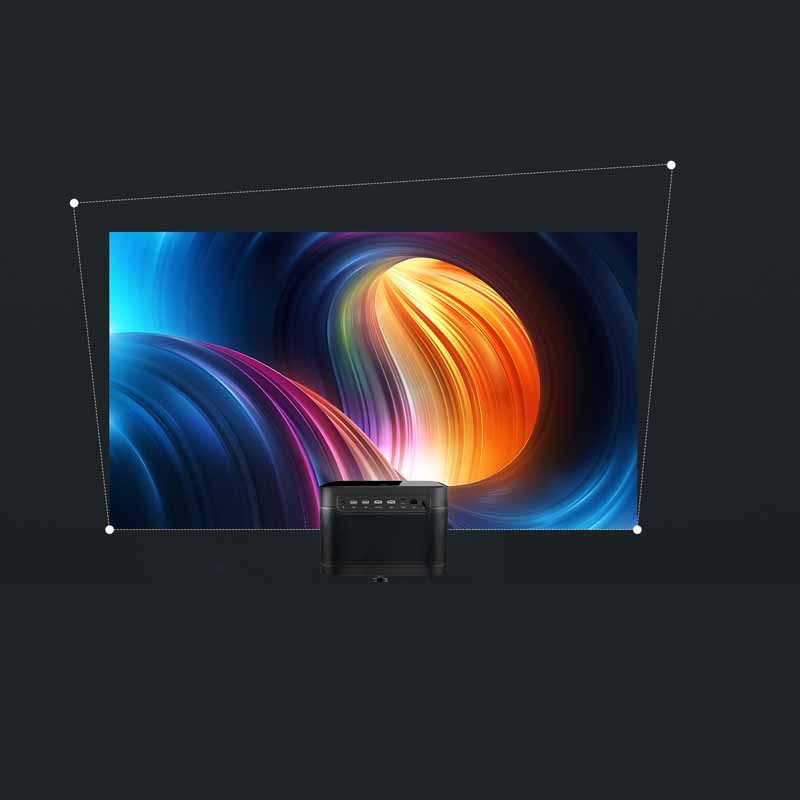
Trapezoidal distortion, commonly known as the 'keystone' effect, occurs when a projector is not positioned perpendicularly to its screen, resulting in a distorted, non-rectangular image. Dangbei, a manufacturer of smart projectors, has published an analysis distinguishing between the two main types of keystone correction: optical and digital.
Ideally, a projector should be placed directly in front of the screen to achieve optimal picture quality. When this perpendicular alignment is not possible, the image can appear trapezoidal. Keystone correction aims to rectify this distortion, typically categorized into vertical and horizontal adjustments.
Optical keystone correction, also referred to as 'shift axis', involves physically adjusting the projector's lens. This method does not alter the image's original pixels, thus preserving the full image quality. It is commonly found in high-end home and professional projectors where image accuracy is paramount.
In contrast, digital keystone correction uses software algorithms to alter the image digitally. While it offers more flexibility and can correct distortion in multiple directions, this process involves image compression and pixel interpolation. This can lead to a reduction in image sharpness and introduce artifacts such as jagged lines and blurred details, making it less suitable for applications demanding high visual fidelity.