Dassault Aviation's Electronic Warfare Payload Completes Collaborative Flight with Rafale
Dassault Aviation and Harmattan AI announced a successful collaborative flight where a Rafale F4 and an unmanned aerial system equipped with the NAMIB payload detected and geolocated a radar.
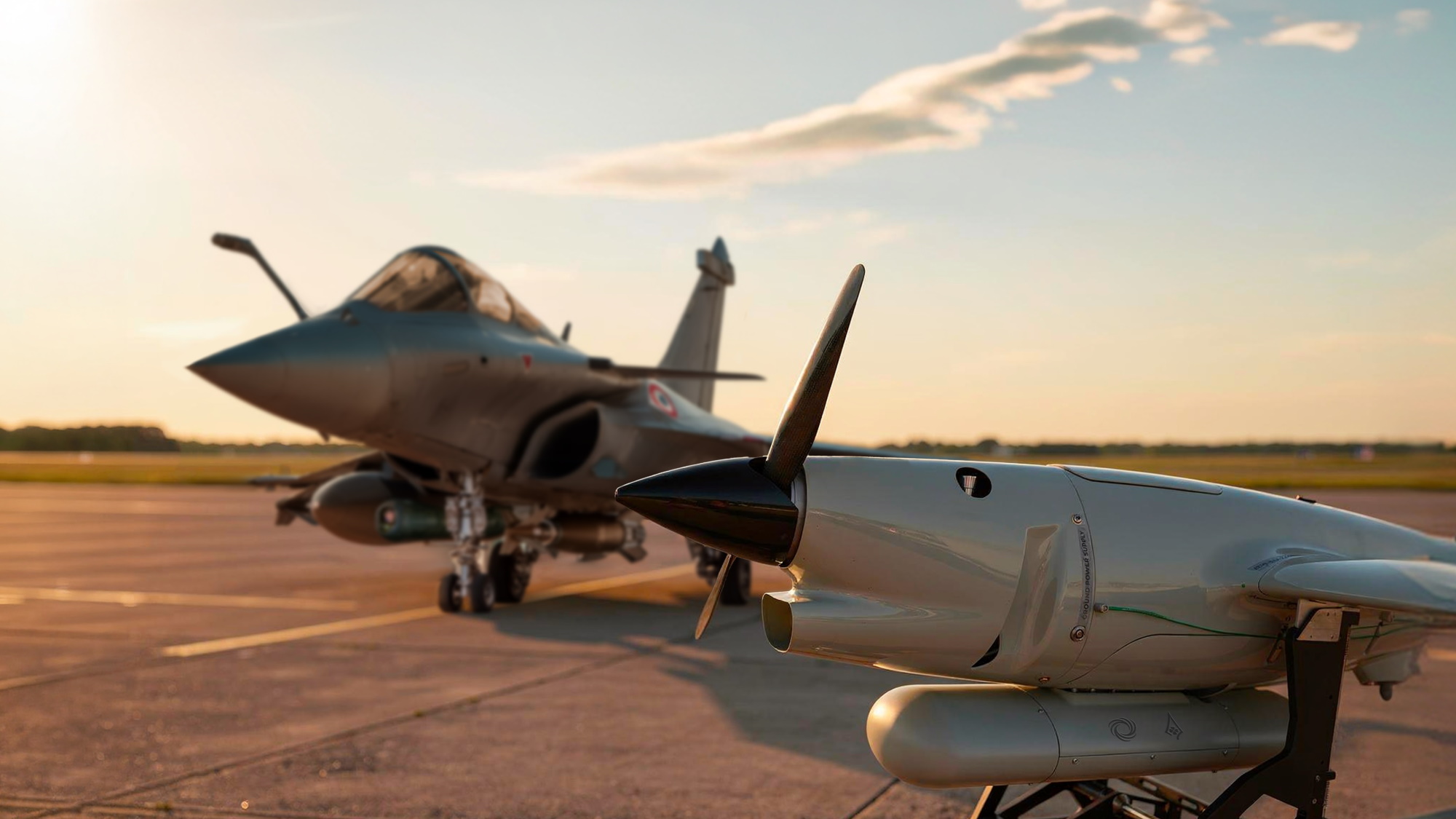
Dassault Aviation and Harmattan AI announced on July 13, 2026, the successful execution of a collaborative in-flight engagement between a Rafale F4 fighter jet and an unmanned aerial system (UAS).
The UAS was equipped with the NAMIB payload, a new electronic warfare device jointly developed by both companies. NAMIB is capable of detecting, identifying, and geolocating electromagnetic emissions, particularly from air defense systems. During the flight, NAMIB discreetly detected and precisely geolocated a radar located several dozen kilometers away. The target's location data was transmitted to the Rafale, which then simulated a strike on the target.
The development of NAMIB, initiated in January 2026, is a key initiative under the strategic partnership between Dassault Aviation and Harmattan AI, aiming to integrate advanced autonomous capabilities into next-generation air combat systems. This collaboration leverages the Rafale F4 standard architecture for seamless communication with a broad range of assets, including ground forces, enabling effective use of new capabilities like NAMIB.
"This flight demonstrates the Rafale's real and tangible multi-domain collaborative combat capabilities," said Eric Trappier, Chairman and CEO of Dassault Aviation. "It also provides another illustration of the Rafale's continuous adaptation to evolving operational requirements, and, in this case, to a 'high-low mix,' that is, the combination of highly sophisticated systems with autonomous and expendable effectors." Harmattan AI's Co-Founder and CEO, Mouad M’Ghari, highlighted the importance of electronic warfare and the ability to deploy these capabilities on lightweight autonomous systems operating close to the threat. "Together, we are demonstrating that it is possible to accelerate the integration of disruptive technologies for the benefit of the armed forces and lay the groundwork for the collaborative combat architectures of tomorrow," he added.