DataM Intelligence: AI and HPC Drive Cooling Innovation, Increasing Demand for Thermal Materials
According to a DataM Intelligence report, artificial intelligence and high-performance computing (HPC) are pushing data centers toward higher heat densities, accelerating the need for advanced thermal materials.
High-performance computing and artificial intelligence (AI) workloads are driving data centers towards unprecedented heat densities, sparking a new race for advanced thermal materials, according to an analysis by DataM Intelligence.
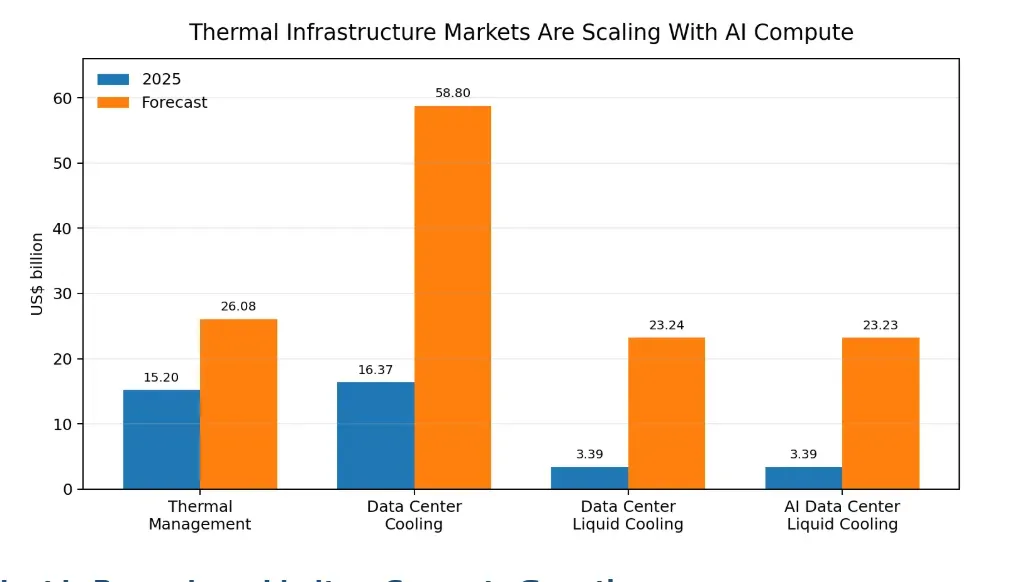
The broader thermal management market, estimated at $15.20 billion in 2025, is projected to reach $26.08 billion by 2033. The data center cooling market is expected to grow from $16.37 billion in 2025 to $58.80 billion by 2035. The AI data center liquid cooling market specifically is forecast to expand from $3.39 billion in 2025 to $23.23 billion by 2035.
This growth is attributed to AI accelerators concentrating significant heat in small physical footprints. This makes the thermal path from the chip surface to the coolant loop critical. As rack power densities rise, weak points in this thermal chain become apparent. Poor contact interfaces, uneven heat spreading, coolant compatibility issues, and thermal cycling can all reduce system performance or equipment lifespan.
Previously, thermal materials were often considered component choices made late in the design process. In the current HPC cycle, thermal design is shifting earlier, as material decisions influence chip packaging, server architecture, rack layout, and facility cooling. The goal is to create a stable thermal chain that allows accelerators to operate at high utilization without throttling or energy waste.
Liquid cooling is a strong indicator that the thermal materials race has entered a more commercial phase. DataM Intelligence notes that less than 30 percent of global data centers currently employ liquid cooling technologies, signaling a long adoption runway.