DataM Intelligence Analyzes Nutraceutical Manufacturing Models: OEM, ODM, Private Label
DataM Intelligence has published an analysis of the selection criteria for nutraceutical manufacturing models, comparing OEM, ODM, and private label options for brands.
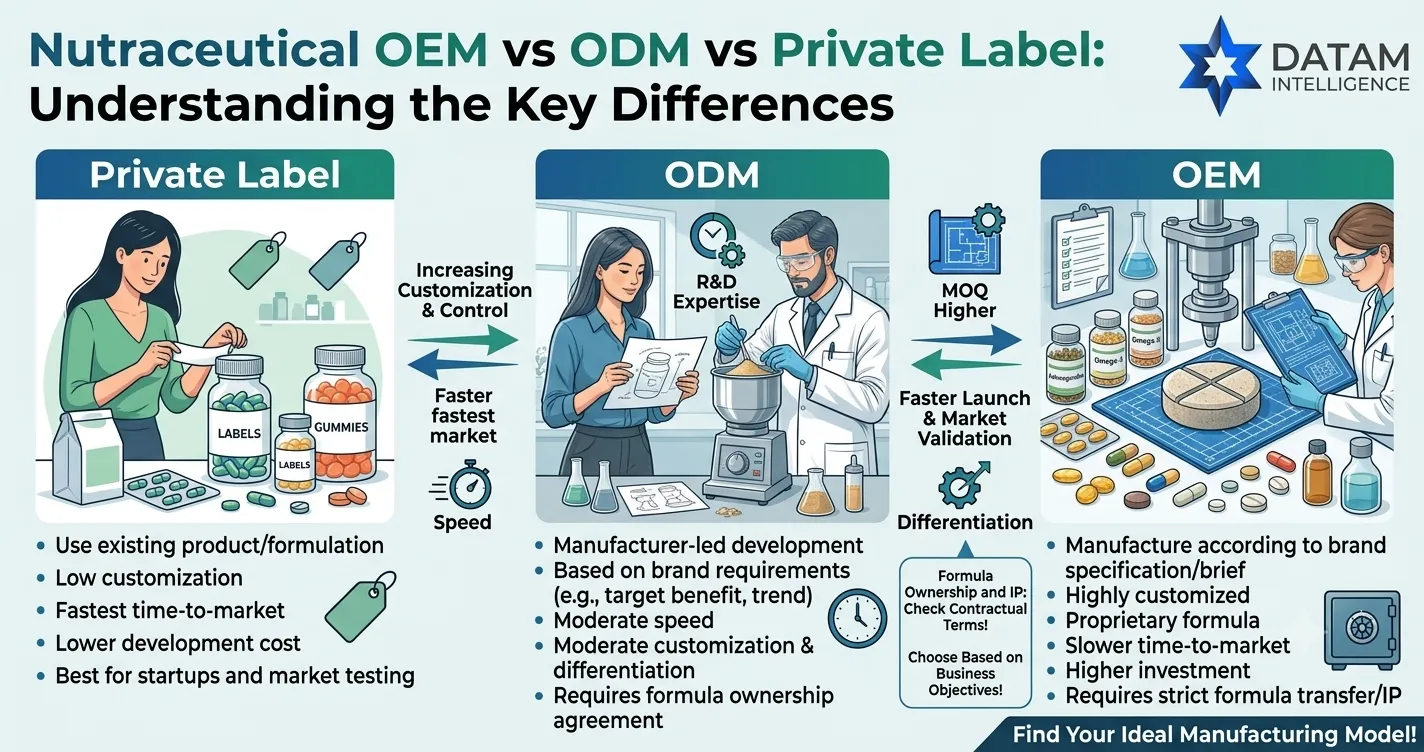
Nutraceutical brands must carefully select their manufacturing model, as it significantly impacts time-to-market, production control, and competitive differentiation. DataM Intelligence, in its latest blog post, breaks down three key models: OEM (Original Equipment Manufacturer), ODM (Original Design Manufacturer), and private label.
The primary distinction between these models lies in product development responsibility. Private label involves a brand using an existing manufacturer's formulation and selling it under its own brand, often providing the quickest route to market. ODM entails the manufacturer actively contributing to or developing the product based on brand requirements, offering more customization. OEM means the manufacturer produces according to a brand-provided formula or detailed specifications, allowing for the greatest product control and differentiation.
The choice depends on a brand's strategy, budget, development capabilities, and objectives. OEM is suitable when a brand possesses a proprietary formulation or a strong need for product uniqueness. It typically requires higher production volumes and clear agreements on formula ownership. ODM is a good fit if a brand has strong market insight but limited internal research and development resources.
Private label offers the simplest and fastest way to introduce an existing product under a company's brand. This model is beneficial for new entrants or those seeking to expand their product line rapidly without substantial R&D investment. DataM Intelligence emphasizes that the precise meaning of these terms can vary among manufacturers, and brands should always verify the specifics within their agreements.