Designer creates shirts to confuse AI surveillance
German designer Simon Weckert has developed a shirt with a pattern designed to disrupt AI image recognition. The garment aims to raise questions about technology's reliability.
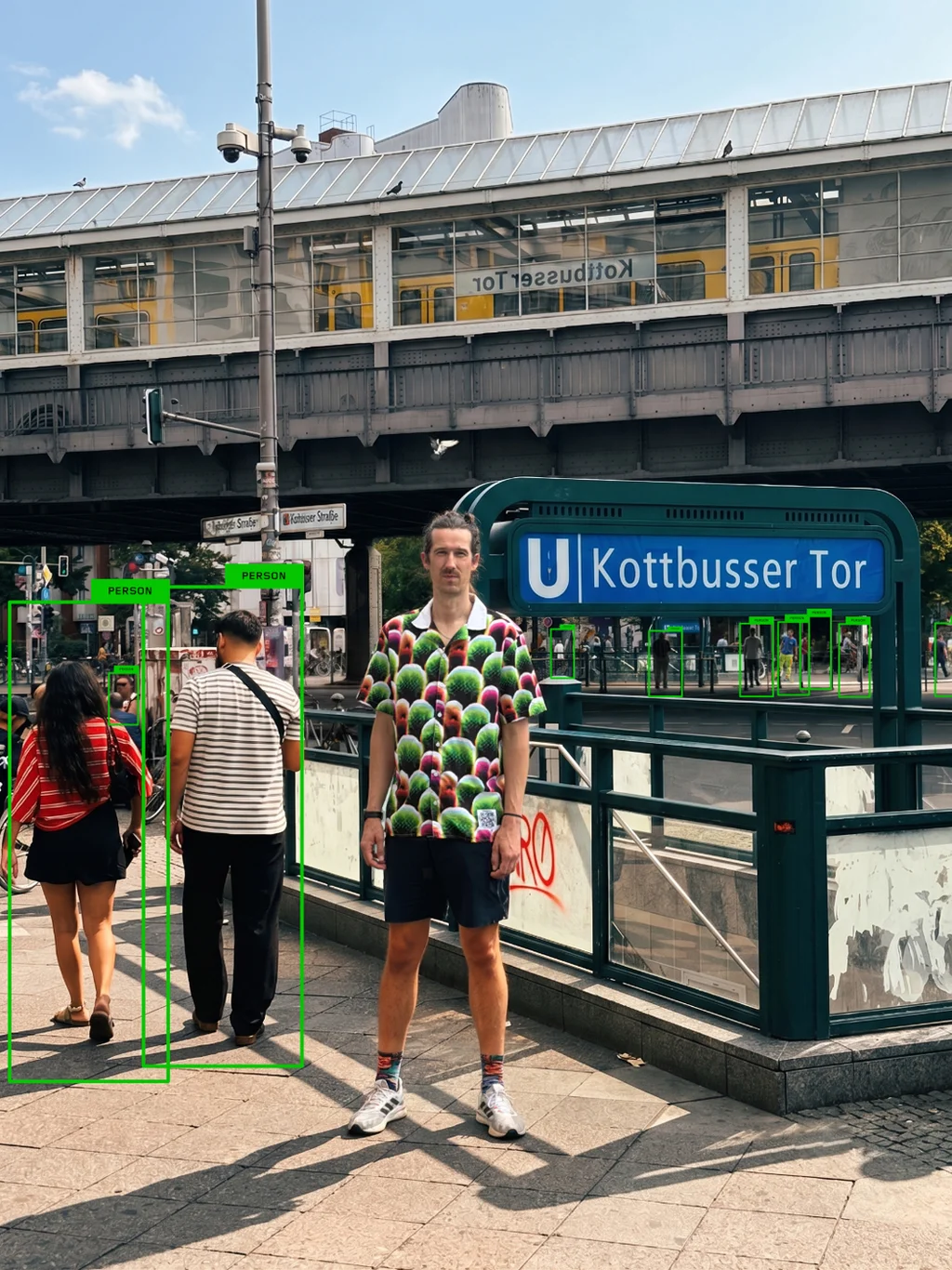
German fashion designer Simon Weckert has created a shirt named Digital Camouflage, intended to confuse AI-based surveillance systems. The shirt features an abstract, colorful pattern designed to make it difficult for machines to identify the wearer.
According to Weckert, AI systems detect images by scanning for statistical patterns such as edges, textures, and color combinations that they have learned to associate with identifying a person. The pattern used in the shirt is mathematically optimized to send incorrect signals to these network-based recognition systems.
The garment aims to strike a balance between the requirements of AI and human aesthetic sensibilities. Weckert notes that purely algorithmically derived patterns can be visually chaotic. The final pattern is therefore a compromise, simultaneously addressing both machines and humans, who perceive it differently.
The designer tested the pattern against the open-source YOLO (You Only Look Once) system, which uses similar technology to many commercial surveillance products. Weckert's objective is not to defeat a specific surveillance system, but rather to question the reliability of such technology. He emphasizes that the shirt's purpose is to demonstrate a structural vulnerability in this class of technology, not to invalidate individual products.