Digital Twins Shift Focus From Design to Live Infrastructure Control
The digital twin market is transitioning from design models to real-time infrastructure control. New applications emphasize operational decision-making.
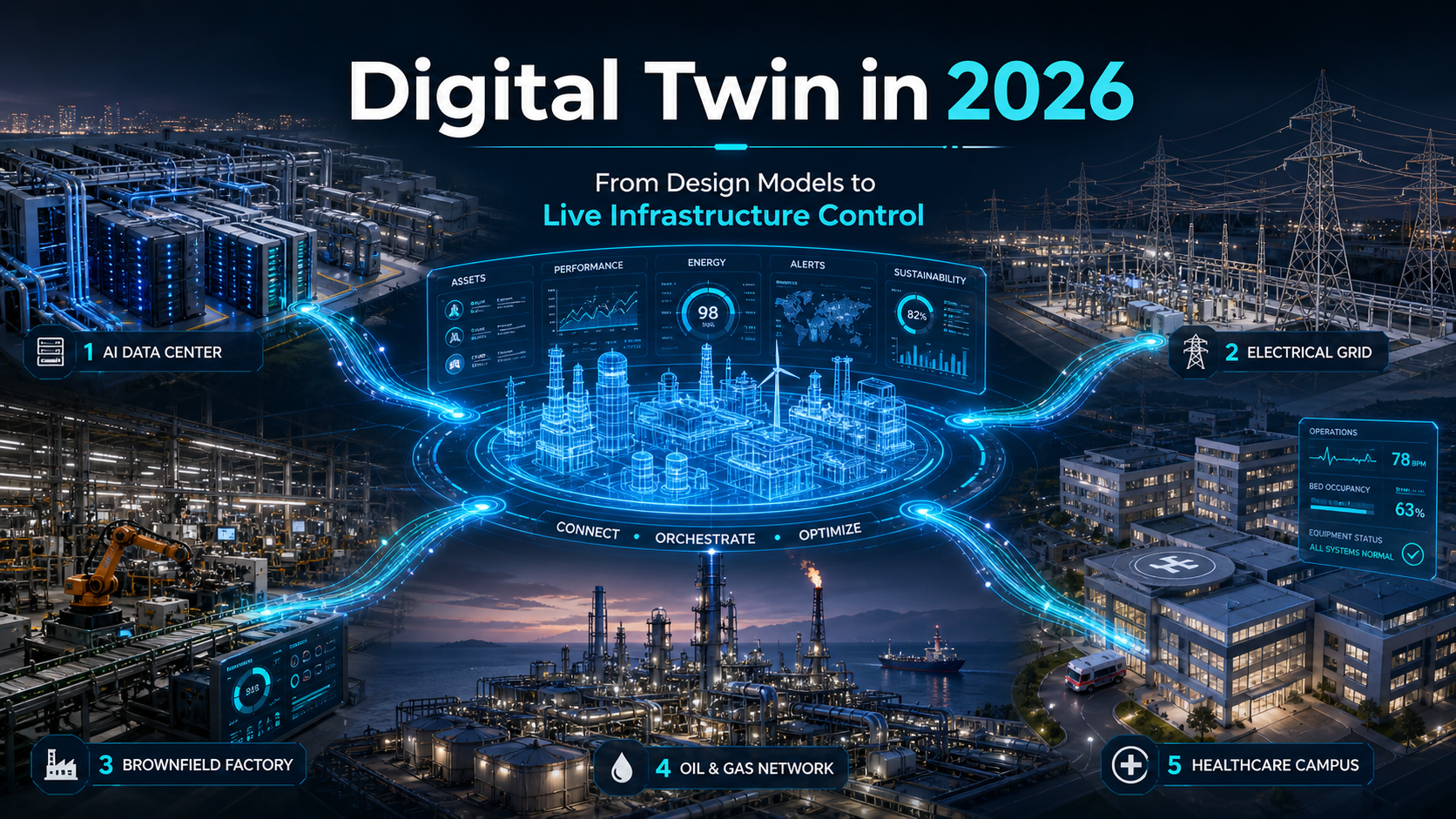
The primary shift in the digital twin market is moving from design-centric visualization to operational control. By 2026, digital twins are increasingly expected to function as decision systems for managing environments that are too complex for static models alone, including AI data centers, electrical grids, and industrial facilities.
While adoption is growing, organizations using digital twins report improvements in key operational and sales metrics, as well as sustainability. However, the focus is shifting from mere visualization to orchestration, requiring the integration of operational data and engineering logic for faster, better decision-making.
Digital twins are becoming crucial for AI data centers, aiding in the design and simulation of computing, networking, power, and cooling systems before construction. New platforms facilitate the coordination of power management, cooling, and system behavior, moving beyond traditional Data Center Infrastructure Management (DCIM).
In electrical systems, the conversation is evolving from isolated projects towards cross-system coordination. Digital twins are being explored for planning, resilience, and security assessments across transmission and distribution networks. The trend favors a federated approach, integrating data from diverse systems rather than a single, all-encompassing platform.