Dinosaur-killing impact crater might have been teeming with life
The Chicxulub asteroid impact 66 million years ago created a hydrothermal system on the ocean floor that may have sustained life for millions of years.
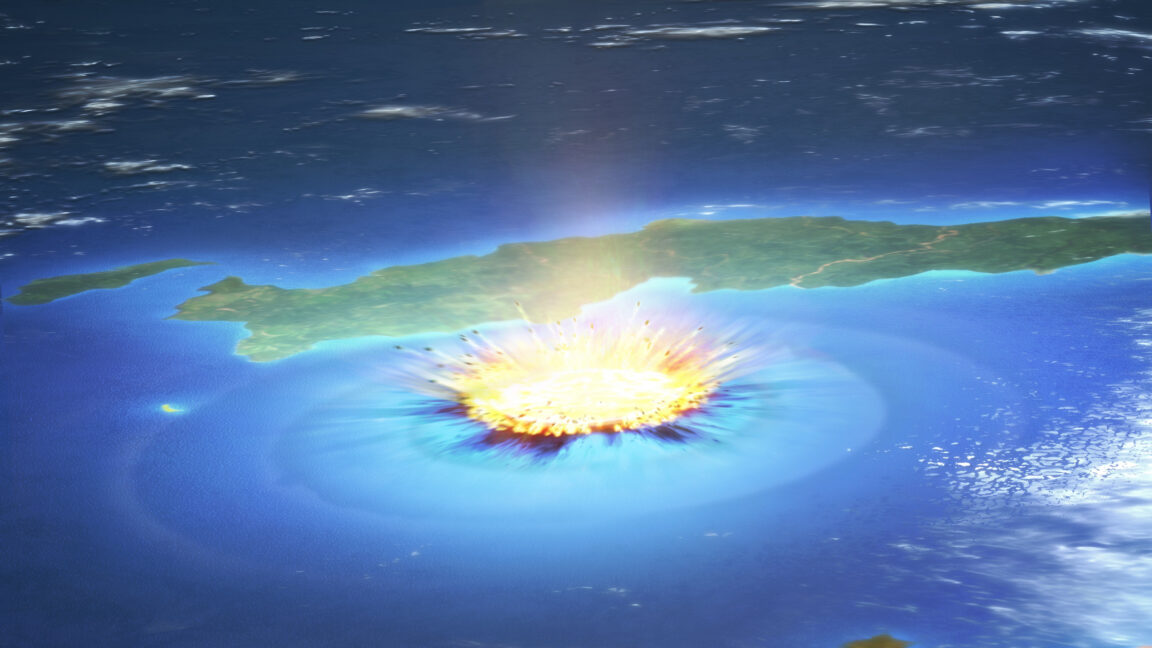
Scientists have proposed that the Chicxulub asteroid impact, which led to the extinction of the dinosaurs 66 million years ago, may have also created an environment teeming with life.
The impact, which occurred in what is now the Yucatan Peninsula, generated hydrothermal systems on the ocean floor. These systems are estimated to have persisted for 8 million years and could have provided a thriving habitat amidst the widespread destruction.
Drilling conducted in the impact zone in 2016 provided insights into the crater's formation and its long-term effects. The asteroid's collision melted a significant amount of rock deep beneath the surface. When this superheated rock came into contact with seawater, it created a porous structure through which hot water circulated.
Researchers theorize that this flow of hot, mineral-rich water in an isolated, dark environment could have attracted microorganisms and possibly other life forms struggling to survive in the aftermath of the cataclysm. The findings suggest the impact was not solely destructive but may have also fostered the emergence and evolution of new life.