DJI Tests Drones on Mount Everest, Enhancing High-Altitude Capabilities
DJI has completed three missions on Mount Everest, advancing drone technology for high-altitude delivery, mapping, and climate research applications.
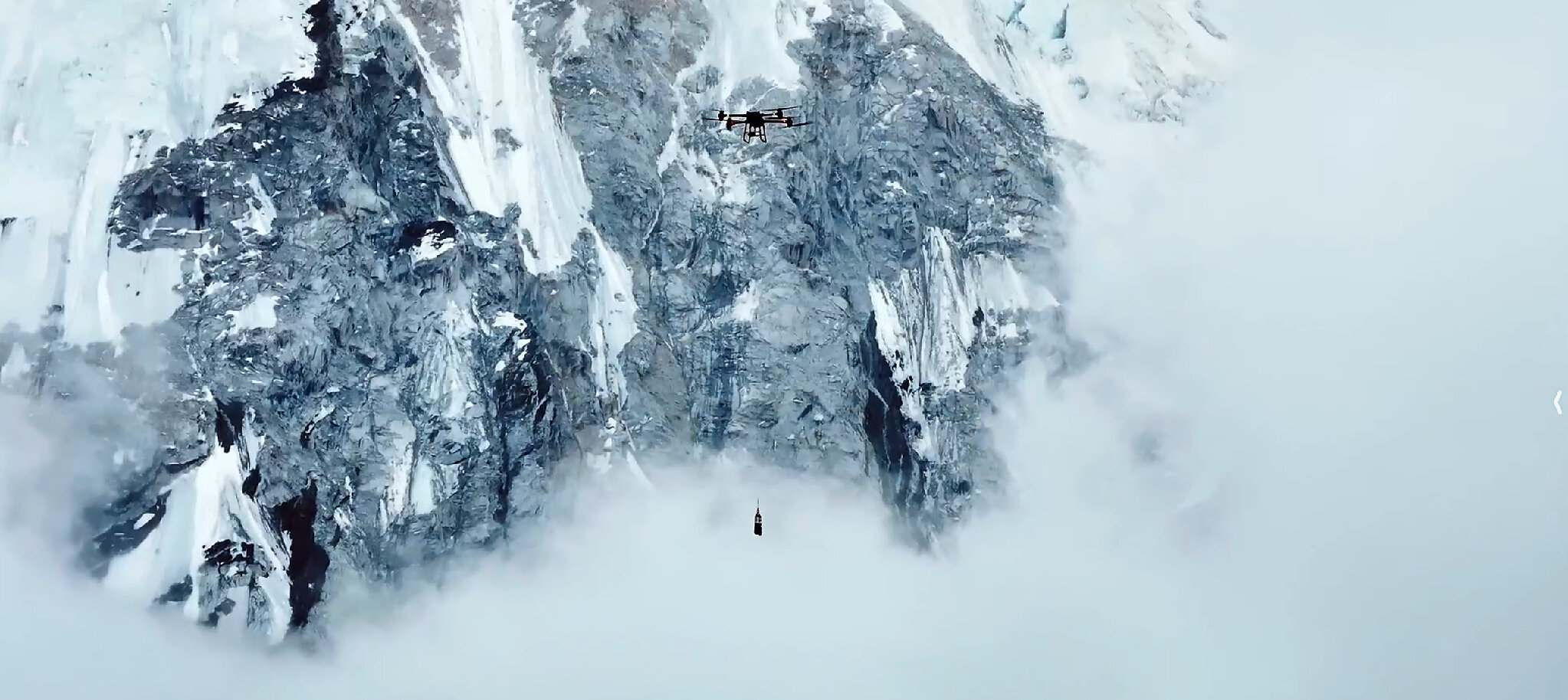
Drone manufacturer DJI announced the completion of three missions on Mount Everest, aimed at advancing drone applications for high-altitude delivery, mapping, and atmospheric research. The tests utilized the new DJI FlyCart 100 for delivery and the DJI Matrice 4E for mapping on the Nepal side, while the DJI EV50 eVTOL drone facilitated long-distance, high-altitude deliveries for atmospheric chemistry research on the Tibet side.
These missions build upon DJI's decades-long efforts to push drone innovation on the world's highest mountain. Previous tests include helicopter tests in 2009 and successful operations of flight control systems at over 4,700 meters altitude in 2010. In 2022, a DJI Mavic 3 drone captured footage from the summit at 8,848.86 meters, and in 2024, the DJI FlyCart 30 completed initial drone delivery tests from base camp to Camp 1 on the southern slope.
The DJI FlyCart 100, a heavy-lift cargo drone, underwent performance evaluations in high-altitude conditions, including payload capacity, transmission range, RTK positioning accuracy, signal stability, and battery endurance in sub-zero temperatures. During the tests, the drone transported climbing expedition supplies like oxygen bottles and ladders, and removed waste. A total of 7,215 kg of supplies were delivered and 2,858 kg of waste removed between base camp and Camp 1. This initiative aligns with Nepal's sustainability goals.
Additionally, the DJI Matrice 4E was tested for high-resolution glacier mapping at an altitude of 6,450 meters amidst temperatures below -20°C. DJI stated its commitment to making the mountain safer and cleaner, while also advancing drone technology for humanitarian and environmental efforts globally.