Enterprises Hedge AI Models Following Claude Fable 5 Blackout
Two-thirds of enterprises had already diversified their AI model strategies before the recent outage of Anthropic's Claude Fable 5 model. Data indicates businesses are hedging against vendor dependency and operational risks.
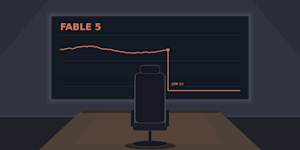
A significant majority of enterprises, two-thirds, had proactively diversified their artificial intelligence model strategies before the recent weeks-long outage of Anthropic's Claude Fable 5 model. New VentureBeat Pulse Research, surveying 145 enterprises, reveals that 51% of organizations blend closed-frontier models with open-weight models deployed on their own infrastructure, while an additional 16% are migrating core workflows away from closed APIs entirely.
The incident, which saw Claude Fable 5 taken offline globally by U.S. export controls on June 12 without prior notice, highlighted the risks of vendor dependency. The model returned this week with enhanced safeguards following the release of China's Z.ai's open-weights GLM-5.2. Enterprises not employing a diversified strategy found themselves reliant on a suddenly unavailable, highly capable system.
Beyond vendor reliance, the outage exposed a critical lack of operational visibility. The research indicates that only 1 in 10 enterprises possess automated monitoring capable of detecting AI model drift or failure in production. Roughly a quarter would only learn of a failure when reported by end-users, or lack the detection capabilities altogether. Furthermore, 79% of enterprises have already experienced financial or operational impacts from autonomous agents, often through unmanaged "shadow AI."
This gap between aggressive AI deployment and the ability to monitor, govern, and control it has been termed the "Control Gap." The June blackout served as a live stress test for this vulnerability. Companies like Liberty IT have adopted a flexible approach, building an "AI backbone" of replaceable components to ensure adaptability to model or vendor changes, prioritizing at least a six-month confidence window for their AI strategy.
The trend towards hybrid or entirely open-source AI deployments is driven not only by risk mitigation but also by the substantial costs associated with leading proprietary models, as seen in earlier examples of companies like Uber and Microsoft adjusting their AI tool strategies.