Enterprises Limit AI Agent Autonomy for Production Success
Companies benefiting from AI agents are now limiting their autonomy to specific rules and tasks, finding that full independence often fails in production environments.
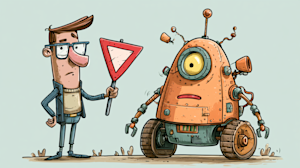
Enterprises are increasingly curtailing the autonomy of AI agents, discovering that granting them unrestricted operational freedom has not yielded the expected results in production environments. The prevailing assumption that greater autonomy directly translates to better performance is being challenged. Companies that achieve success with AI agents are those that define precise responsibilities and ensure agents operate within clear, predefined boundaries.
Gartner forecasts that over 40% of agentic AI projects will not survive until 2028, citing escalating costs, unclear business value, and inadequate risk controls as primary reasons. McKinsey's research indicates that while agentic AI deployment is accelerating across industries, the average maturity level for responsible AI practices stands at just 2.3 out of 4. Only about 30% of organizations have robust governance and oversight mechanisms in place.
This shift is reshaping the competitive landscape. The race is no longer solely about deploying the most autonomous agent fastest, but rather about building trust and ensuring regulatory compliance. The critical challenge now lies in obtaining and maintaining production approval from risk, legal, and compliance teams.
The breakdown of full autonomy in production often stems from integration complexities and a lack of traceability. When an agent makes an error in a multi-step process, determining the cause and assigning responsibility can become a difficult task. This opacity is a frequent reason why legal and risk management teams block agent projects from reaching full production. Companies treating this solely as a technical integration problem are often the ones that stall.