eROSITA telescope delivers deepest X-ray view of the sky
The eROSITA X-ray telescope has completed its first full sweep of the sky, revealing over one million objects. This new map of the energetic universe, produced with contributions from LMU Munich physicists, doubles the number of known X-ray sources.
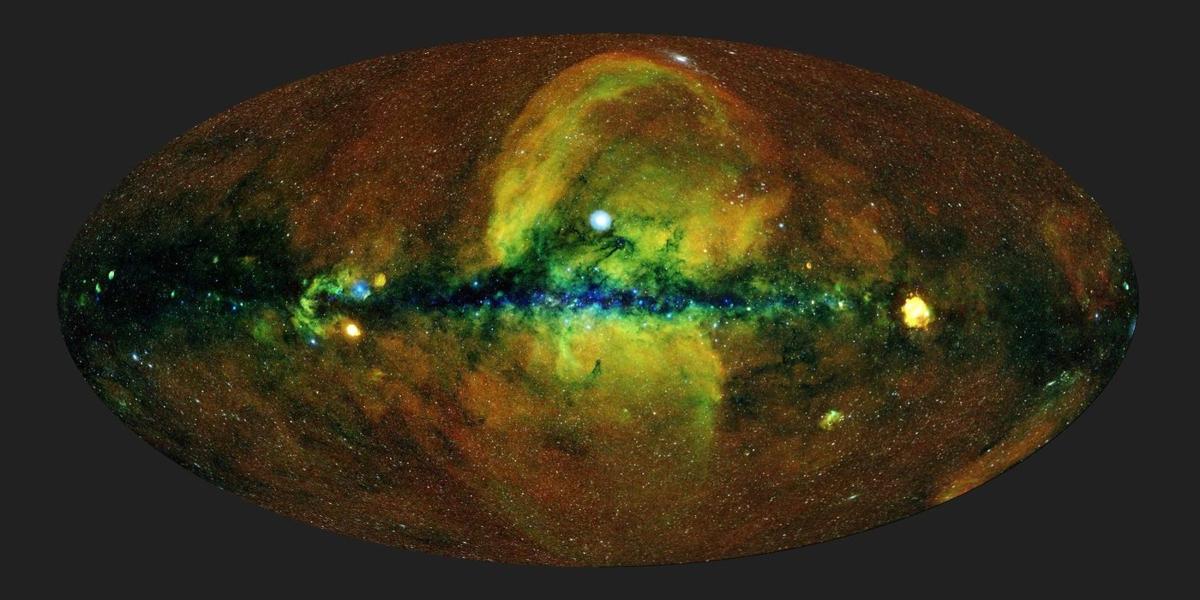
The eROSITA X-ray telescope, aboard the SRG spacecraft, has completed its first full 182-day scan of the sky. The resulting map of the hot, energetic universe contains over one million objects, effectively doubling the number of X-ray sources cataloged in the preceding 60 years of X-ray astronomy.
"This all-sky image completely changes the way we look at the energetic universe," stated Peter Predehl, principal investigator of eROSITA at the Max Planck Institute for Extraterrestrial Physics. The creation of the map was a significant undertaking. This first complete eROSITA sky image is approximately four times deeper than the previous all-sky survey conducted by the ROSAT telescope 30 years ago. Most of the newly identified sources are active galactic nuclei located at cosmological distances, providing insights into the growth of supermassive black holes over cosmic time.
Research groups within the Faculty of Physics at Ludwig-Maximilians-Universität (LMU) in Munich have participated in the preparation for eROSITA since 2009. The Cosmology and Structure Formation research group is responsible for cross-identifying galaxy clusters detected in the eROSITA survey with their optical counterparts, thereby providing distance data for thousands of newly discovered systems. The Physical Cosmology research group at LMU plans to utilize the new data to identify voids, which are large, low-density regions that define the large-scale structure of the universe.
Other LMU groups focus on using simulations to study the physical processes driving the formation and evolution of active galactic nuclei and galaxy clusters. These LMU research efforts are conducted in close collaboration with the broader eROSITA science team, comprising members from the Max Planck Institute and other participating German institutions. The preparatory work has enabled the rapid compilation of new galaxy cluster catalogs, including redshift data.