ESS Instrument ODIN Completes Safety Review, Ready for Neutrons
The ODIN neutron imaging instrument at the European Spallation Source has passed its safety readiness review. The instrument can produce 3D images of materials using both neutrons and X-rays.
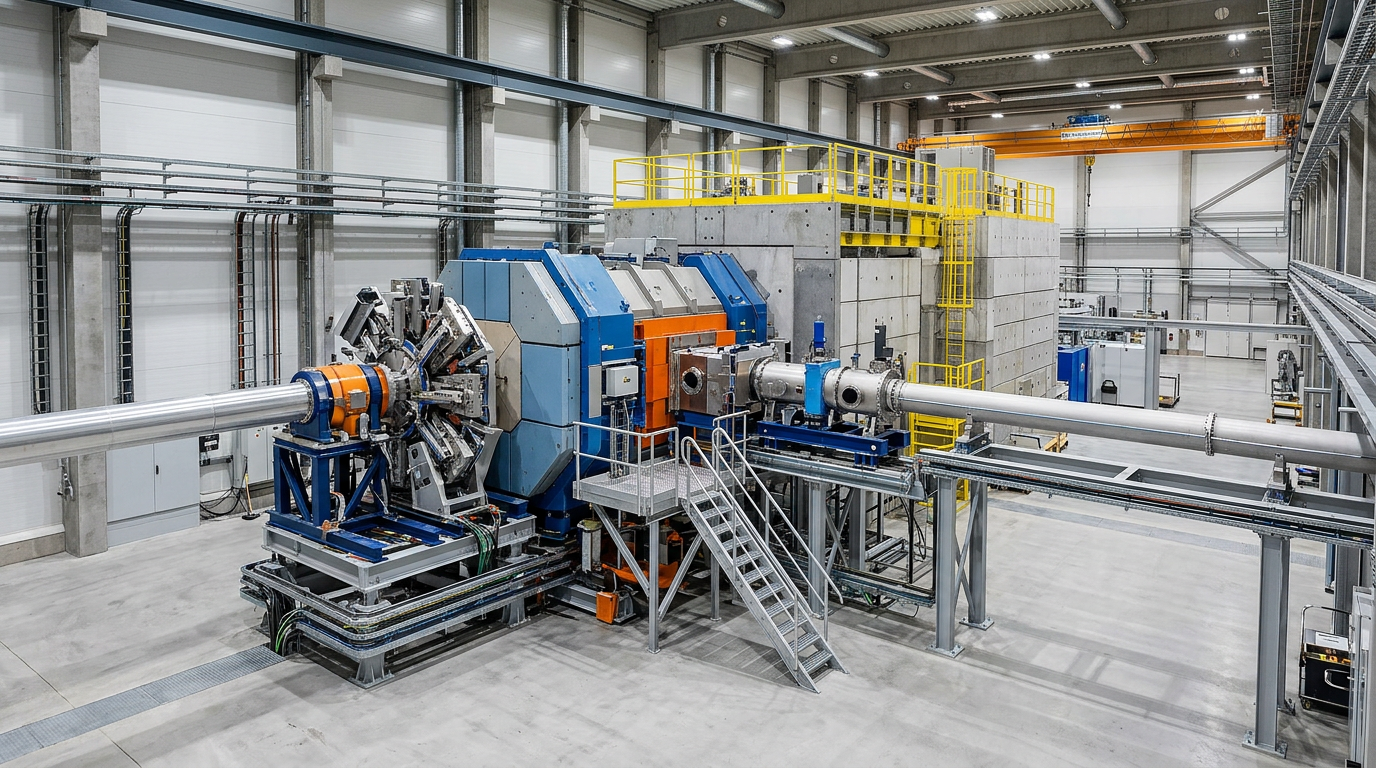
ODIN, a multi-purpose neutron imaging instrument at the European Spallation Source (ESS), is now ready to receive neutrons after completing its safety readiness review. The instrument was built by the Technical University of Munich (TUM) in Germany and the Paul Scherrer Institute (PSI) in Switzerland.
ODIN, which stands for Optical and Diffraction Imaging with Neutrons, will produce images using neutrons. Neutrons can penetrate materials in ways that X-rays cannot, providing complementary information about material structure and function. ESS's pulsed neutron beam allows ODIN to not only detect where neutrons are 'missing' after passing through a sample but also to determine why they are missing, such as due to temperature changes or phase transformations.
The instrument will enable research into areas such as the embrittlement of steel caused by hydrogen, allowing detection of tiny amounts of hydrogen without damaging the material. ODIN can accommodate large samples, such as engines, and produce 2D radiographs and 3D reconstructions through a process similar to medical CT scans.
ODIN will also be equipped with an X-ray source that will irradiate the sample simultaneously with the neutron beam. The combination of neutrons and X-rays interacting differently with matter will provide scientists with a more complete picture of the material being studied, covering research fields from cultural heritage and paleontology to mechanical engineering, biomedicine, food science, and plant physiology.
ODIN successfully passed its instrument safety readiness review (iSRR) in December last year. After a decade of work by the instrument team on the construction project, the instrument is officially ready for neutrons. The next steps involve collaboration with early scientific users to calibrate the instrument and prepare it for research.