ETH Zurich and BMKGene Advance Endosymbiosis Research with Novel Induction Method
Researchers at ETH Zurich have successfully induced a new endosymbiotic relationship between bacteria and fungi using microinjection technology supported by BMKGene. The breakthrough offers insights into early endosymbiosis evolution.
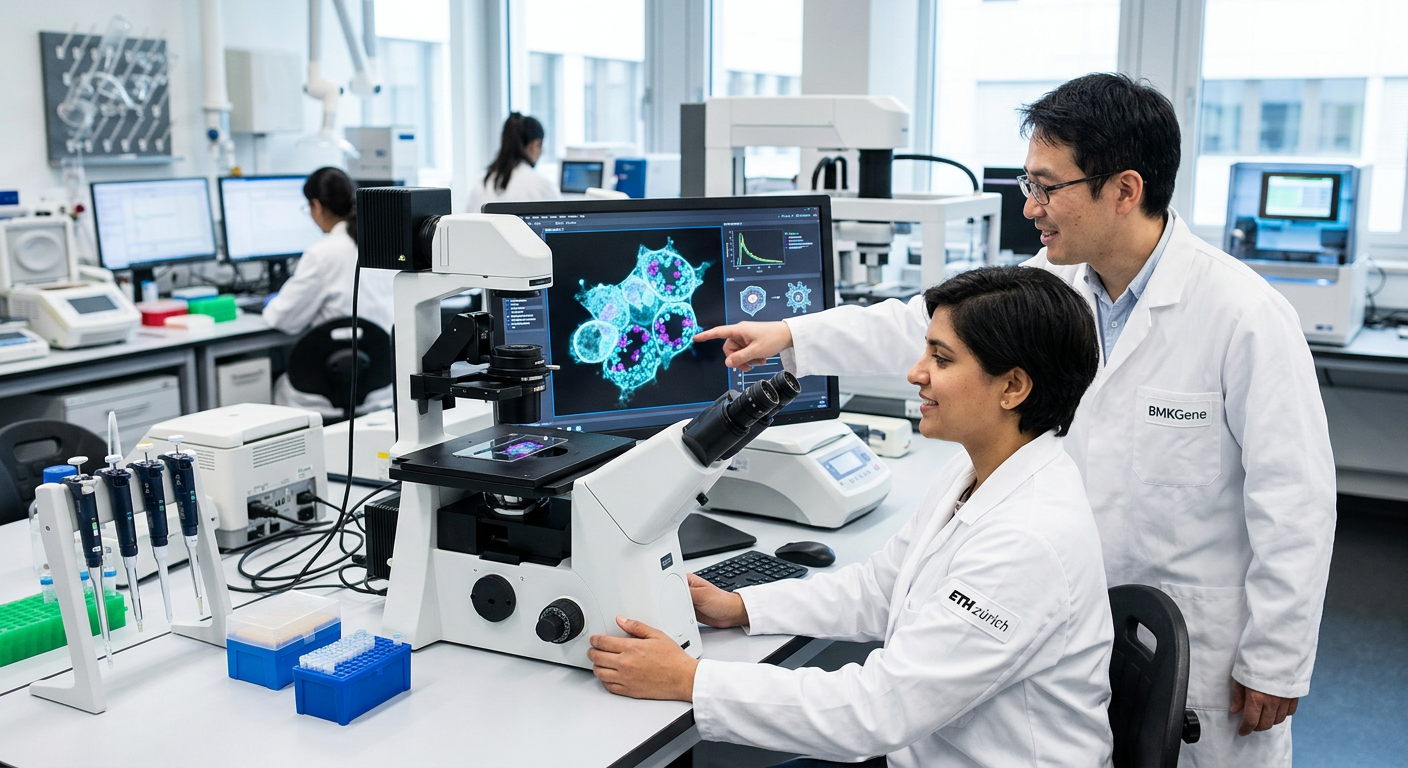
A research team at ETH Zurich has achieved a significant breakthrough in understanding endosymbiosis, the intimate association between different organisms. By successfully inducing a novel artificial symbiotic relationship between bacteria and a fungus, the scientists have opened new avenues for studying the evolution of life and developing synthetic biology applications.
The study, led by Julia A. Vorholt, utilized advanced microinjection techniques to implant bacteria into the filamentous fungus Rhizopus microsporus. This achievement overcomes previous challenges in creating new endosymbioses in controlled environments, allowing for detailed real-time tracking and analysis of the initial stages of this biological interaction. The findings were published in the scientific journal Nature.
Employing Fluidic Force Microscopy (FluidFM), the researchers precisely injected bacteria into fungal germlings. This method enabled detailed observation of bacterial survival and colonization within the host cells. The experiments demonstrated that the implanted bacteria could be vertically transmitted to subsequent generations, and adaptive laboratory evolution successfully enhanced the stability of the induced endosymbiosis.
Biomarker Technologies (BMKGene) provided technological support for this research, facilitating deeper investigation into complex biological processes. This work not only sheds light on the evolutionary mechanisms driving endosymbiosis but also provides a foundational platform for future advancements in synthetic biology and the creation of designer endosymbionts with specific traits.